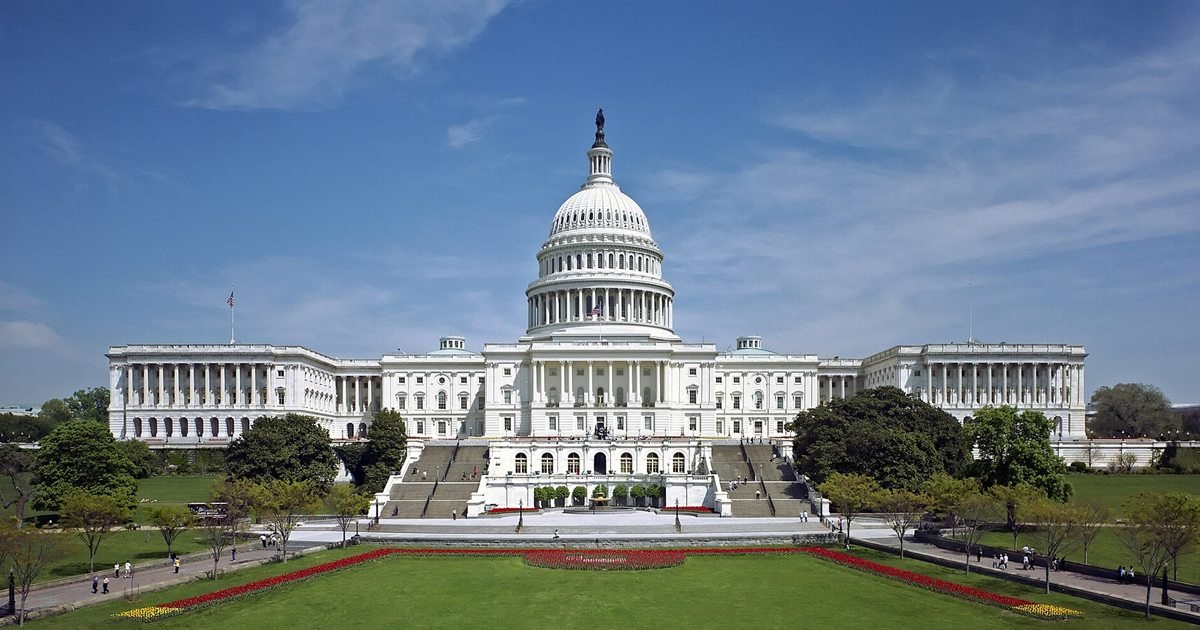
Photo: Architect of the Capitol / Wikimedia Commons (public domain)
Democrats Win Congress: Why the Dow Jumped 1,500 Points and What a Divided Washington Means for Your Portfolio
- Democrats won both the House and the Senate in the November 3, 2026 midterms. CBS News projected a House majority; outlets reported Democrats flipped at least seven Republican-held Senate seats. Some races were still being counted on Wednesday.
- The Dow rallied as much as 1,500 points (about 2.9%) on Wednesday morning, with the S&P 500 up roughly 1.7%–1.9% and the Nasdaq up about 2%, according to CNBC and Yahoo Finance intraday data.
- The 10-year Treasury yield fell about 5 basis points to roughly 4.90%, and oil prices slipped.
- Winners: banks, solar and clean energy (First Solar up roughly 8%–11%), big tech. Laggards: defence, Trump Media, and AI data-center 'neocloud' names such as CoreWeave.
- President Trump said he would accept the results. A Democratic Congress effectively halts his legislative agenda for his final two years, though many tariffs rest on executive authority.
What happened
Democrats won control of both chambers of Congress in Tuesday's midterm elections. CBS News projected a Democratic House majority, and multiple outlets reported Democrats flipped at least seven Republican-held Senate seats, including races in Texas, Ohio, Kansas and Maine. Some contests were still being counted on Wednesday.
The result means a divided Washington for the last two years of President Donald Trump's term. CBS described a Democratic House as effectively halting the president's legislative agenda.
How markets reacted
Wall Street liked it. By mid-morning Wednesday:
| Market | Move (intraday, Nov. 4) |
|---|---|
| Dow Jones Industrial Average | Up as much as |
| S&P 500 | Up ~1.7%–1.9% |
| Nasdaq Composite | Up ~2% |
| 10-year Treasury yield | Down ~5 bp to ~4.90% |
| Oil (Brent) | Lower, on US–Iran talks |
Intraday figures from CNBC and Yahoo Finance; check final closing prices.
The rally was global. European banks had their best day in months, and US stock futures surged overnight. Asia was the exception: Tokyo's Nikkei fell sharply as AI and chip stocks sold off (our report).
Why markets like gridlock
Strategists gave three reasons:
- Less policy surprise. With each party holding a check on the other, big swings in taxes and spending become unlikely. One strategist quoted by Global News said gridlock "historically is good for the market."
- Lower yields. Investors read a Democratic Congress as reducing the chance of large new deficit-financed tax cuts. That pulled Treasury yields down, which helps stock valuations and mortgage rates.
- A calmer reaction from the White House. Analysts also credited Trump's initial tone after he said he would accept the outcome.
JPMorgan had expected only a modest market move from a Democratic sweep before the vote, so the size of the rally caught some forecasters off guard.
Winners and losers
Rallied:
- Solar and clean energy. First Solar jumped roughly 8%–11%, with Enphase, Sunrun and SolarEdge also sharply higher, on bets that federal clean-energy support is safer. See our sector report.
- Banks. Bank of America rose about 2.5% as investors rotated outside tech.
- Big tech. Apple, Amazon and Alphabet all traded higher.
Lagged:
- Trump Media & Technology Group fell about 9%.
- AI data-center "neoclouds" such as CoreWeave fell about 8% on worries about tougher rules for data-center projects. Read about CoreWeave's debt.
- Defence stocks slipped in Europe on fears of slower US military spending growth (our report).
What a Democratic Congress can and can't do
Can:
- Block new tax cuts or spending plans.
- Hold hearings on tariffs, AI and other policies.
- Use the budget and debt-ceiling process as leverage.
Can't (on its own):
- Undo tariffs that rest on executive trade authority. A bill to repeal them would face a presidential veto.
- Set interest rates. That's the Federal Reserve's job, and the Fed held rates on October 28 (our coverage).
That's why analysts warned trade tensions could still flare. One economist described a president who may be "an angry duck" rather than a lame duck.
What it means for you
- Don't trade the headlines. Election-day moves often fade within weeks. Our explainer on how midterms affect stocks shows how the year after a midterm has historically played out.
- Rebalance if needed. A broad rally can push your stock allocation above target. Trimming back is a disciplined way to lock in gains.
- Bond yields matter. Lower long-term yields help mortgage rates and bond prices. If you were waiting to lock in a CD or Treasury at around 5%, the window may be narrowing.
- Watch Friday's jobs report. The October payrolls report on November 6 is the next big test. See our preview.
What to watch next
- Remaining race calls and final seat counts.
- Friday, November 6: October jobs report.
- Mid-November: Nvidia earnings and October CPI.
- January 2027: The new Congress is sworn in.
Frequently asked questions
Who won the 2026 midterm elections?
Democrats won control of both chambers of Congress in the November 3, 2026 midterms. CBS News projected a Democratic House majority, and outlets reported Democrats flipped at least seven Republican-held Senate seats. A few races were still being counted the next day.
How did the stock market react to the 2026 midterms?
Stocks rallied on Wednesday, November 4. The Dow rose as much as about 1,500 points (roughly 2.9%) in morning trading, the S&P 500 gained about 1.7% to 1.9% and the Nasdaq about 2%. Treasury yields and oil prices fell.
Is a divided government good for stocks?
Historically, markets have tended to do well under divided government because gridlock makes big, surprising policy changes less likely. That pattern is not a guarantee; earnings, interest rates and the economy matter far more over time.
Will tariffs go away now that Democrats control Congress?
Not automatically. Many of the administration's tariffs rest on executive trade authority rather than new legislation, so Congress cannot simply switch them off. A Democratic Congress can hold hearings, use budget leverage and pass bills, but the president can veto them.
Which sectors benefit from a Democratic Congress?
On the first day, solar and clean-energy stocks, banks and big tech rallied, while defence stocks, Trump Media and AI data-center operators lagged. First-day moves often fade, so it's better to think about long-term fundamentals than chase them.
Should I change my investments after the midterm election?
For most long-term investors, no. Election-driven moves are usually short-lived. Rebalancing to your target mix and keeping costs low matters more than positioning for a particular party.
Primary sources
- CNBC — Dow rallies 1,500 points after decisive Democratic midterm victory (live updates, Nov. 4, 2026)
- CBS News — 2026 House midterm election results
- Yahoo Finance — Stock market today: Dow rallies after Democrats win control of Congress
- Global News — Stock markets rally in early trading after U.S. midterm election
- CNBC — The midterms are here. How JPMorgan expects the market to react
- Euronews — US midterms: What Trump's defeat means for Europe and global markets
Data & disclaimer: This article is for educational purposes only and is not financial or investment advice. Figures reflect data available as of Nov 4, 2026, and conditions change — always confirm current pricing, rates and rules with the provider before you act. Written by Elizabeta Dimoska. See our editorial standards and disclosure.
Comments