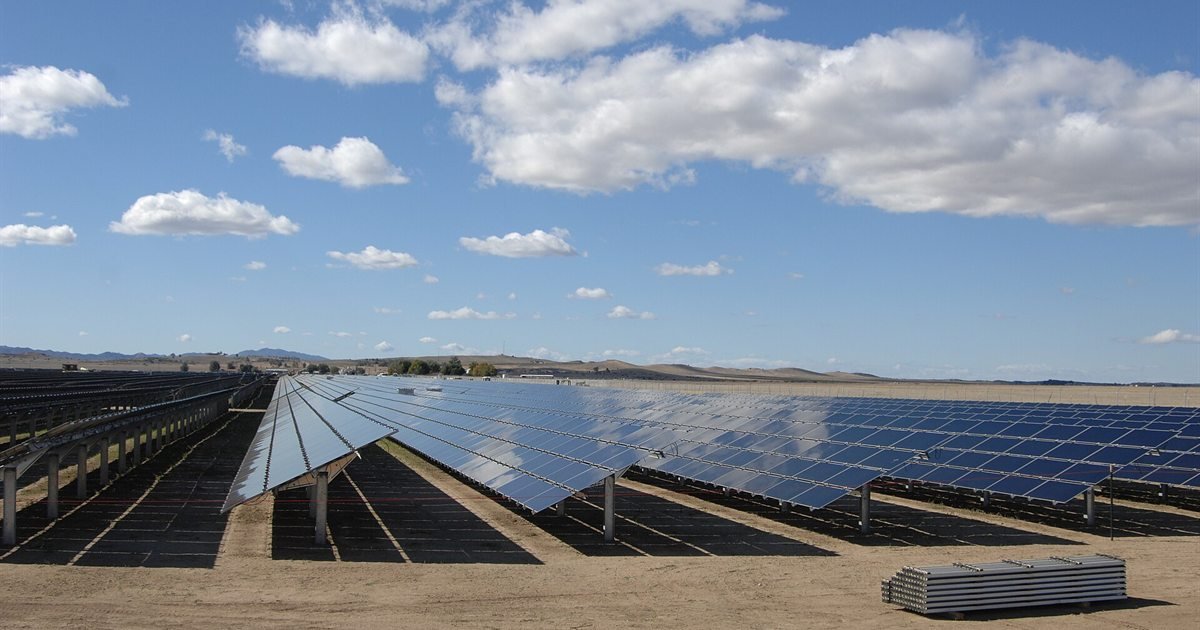
Photo: Pacific Southwest Region from Sacramento, US / Wikimedia Commons (public domain)
Solar Stocks Surge After Democrats Win Congress: First Solar, Enphase and Sunrun Jump, but Can the Rally Last?
- On Wednesday, November 4, First Solar rose roughly 8%–11%, Enphase and SolarEdge as much as 12%, Sunrun about 8.6%, Plug Power about 10.6% and Bloom Energy about 5.8%, according to intraday reports.
- Trigger: Democrats won both chambers of Congress, which analysts said should bolster confidence that federal clean-energy support continues.
- Lower Treasury yields (10-year down to about 4.90%) also helped. Solar projects and home solar loans are highly sensitive to interest rates.
- In Europe, Ørsted rose about 7% and Vestas about 5%.
- Caveat: any new law still needs to pass both chambers and could face a presidential veto. Analysts said the policy impact is uncertain.
The "blue trade"
If one group captured Wall Street's reaction to the midterms, it was clean energy.
| Stock | What it does | Approx. move, Nov. 4 |
|---|---|---|
| First Solar | US solar panel maker | +8% to +11% |
| Enphase Energy | Home solar microinverters | Up to +12% |
| SolarEdge | Solar inverters | Up to +12% |
| Sunrun | Residential solar installer | ~+8.6% |
| Plug Power | Hydrogen fuel cells | ~+10.6% |
| Bloom Energy | Fuel cells for data centers | ~+5.8% |
Intraday moves from PV Tech, Benzinga and Yahoo Finance. Check closing prices.
European wind stocks joined in: Ørsted rose about 7% and Vestas about 5% (our Europe report).
Why clean energy rallied
1. Policy risk fell. With Democrats controlling both the House and Senate (our report), new laws that cut clean-energy support are now unlikely. Analysts told PV Tech the result "should bolster confidence" that federal support continues.
2. Yields fell. The 10-year Treasury yield dropped about 5 basis points to roughly 4.90%. Solar is a financing business: utility-scale projects and home solar loans both depend on borrowing costs. Analysts said lower yields were a big part of the lift.
3. The stocks were cheap and heavily shorted. Clean energy has lagged the market for years, so good news can trigger sharp short-covering rallies.
What Congress can and can't do
Can:
- Pass bills extending or restoring tax credits.
- Use the budget process to fund clean-energy programs.
- Block new legislation that would cut support.
Can't (alone):
- Override a presidential veto without two-thirds majorities.
- Change executive decisions on permitting, federal leases or tariffs on imported panels.
So the policy impact is genuinely uncertain. Analysts cautioned that the extent to which election results translate into policy changes is unclear.
The power-demand angle
There's another long-term tailwind: AI data centers need enormous amounts of electricity. Solar, batteries and fuel cells are among the fastest ways to add power. Read about AI's power bottleneck.
Interestingly, AI data-center operators fell on Wednesday while clean-energy stocks rose, as investors bet a Democratic Congress could scrutinize data-center growth.
What it means for you
- Don't chase a one-day pop. Clean-energy stocks have had several big political rallies that faded.
- Rates matter more than politics. If yields rise again, solar stocks usually fall.
- Diversify. Clean-energy ETFs, utilities and infrastructure funds spread the risk. See our renewable energy investing guide.
What to watch next
- Clean-energy earnings this month, including Enphase and Sunrun updates.
- Treasury yields after Friday's jobs report.
- January 2027: The new Congress's first energy bills.
Frequently asked questions
Why did solar stocks go up after the 2026 midterms?
Investors bet that a Democratic-controlled Congress makes federal support for clean energy, such as tax credits, more secure, and that new laws hostile to renewables are now unlikely. Falling Treasury yields also helped, since solar projects and home solar loans depend on cheap financing.
How much did First Solar stock rise?
First Solar rose roughly 8% to 11% in trading on November 4, 2026, depending on the time of day and source, to around $200 a share.
Can a Democratic Congress restore clean-energy tax credits?
It can pass legislation, but any bill would need to pass both chambers and could be vetoed by the president. Executive actions on permitting and federal land also remain with the administration, so the policy impact is uncertain.
Are solar stocks a good investment now?
Solar stocks are very volatile and sensitive to interest rates, subsidies and Chinese competition. One-day political rallies often fade. A diversified clean-energy or broad market ETF spreads that risk.
How can I invest in clean energy without picking stocks?
Clean-energy ETFs hold dozens of solar, wind, battery and utility companies. Utilities and broad infrastructure funds offer steadier exposure. Our renewable energy guide covers the options.
Primary sources
- PV Tech — Renewable energy stocks rally as Democrats seize control of Congress
- Yahoo Finance — First Solar shares surge 8.1% as Democratic midterm victory boosts renewable energy stocks
- Benzinga — First Solar stock, peers shine as Democrats win Congress: what midterm results mean for solar policy
- 24/7 Wall St. — 'Blue trade' sends First Solar and Sunrun soaring while data center stocks slump
- CNBC — Stock market today: live updates (Nov. 4, 2026)
Data & disclaimer: This article is for educational purposes only and is not financial or investment advice. Figures reflect data available as of Nov 4, 2026, and conditions change — always confirm current pricing, rates and rules with the provider before you act. Written by Elizabeta Dimoska. See our editorial standards and disclosure.
Comments