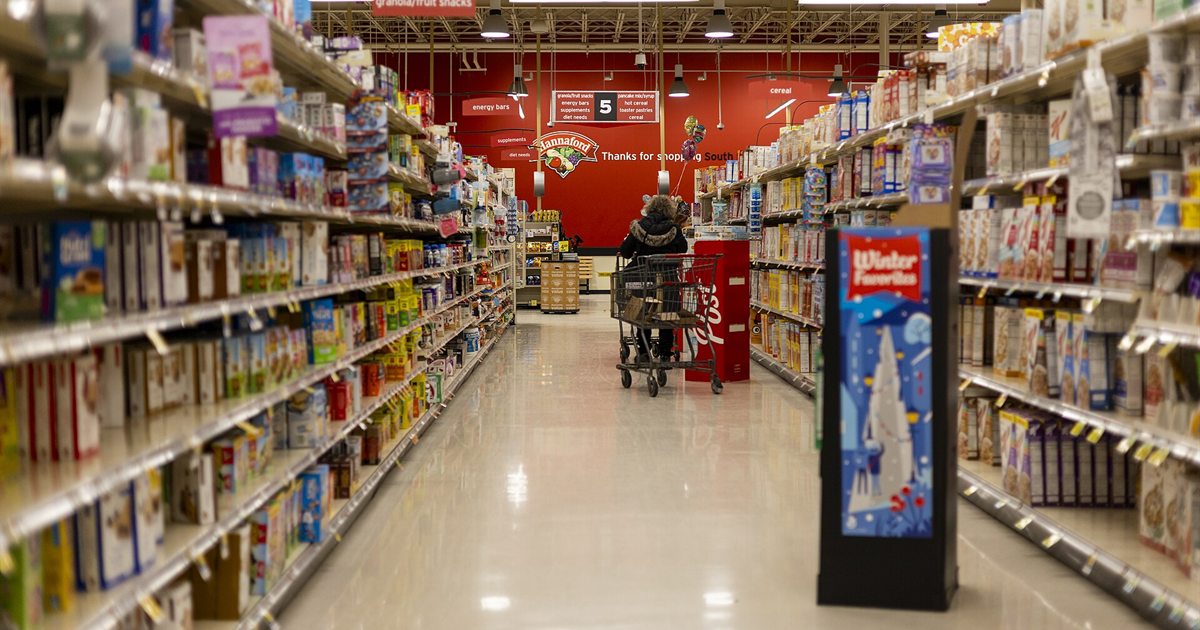
Photo: Tessa Bury / Wikimedia Commons, CC BY 4.0, cropped
Core vs Headline Inflation: What's the Difference, and Which Number Actually Matters for Your Money?
Headline inflation measures the change in prices for everything in the typical household basket, including food and energy. Core inflation strips out food and energy, because those prices jump around with weather, wars and oil markets. Headline is what your wallet feels; core shows the underlying trend and is what central banks watch most closely when setting interest rates. In September 2026, US headline CPI was 3.7% but core CPI was 2.6%, because gasoline was up 34%. In Canada, headline was 3.1%, but inflation excluding gasoline was 2.2% and the Bank of Canada's core measures were near 2%. The Federal Reserve officially targets 2% inflation using the PCE price index; the Bank of Canada targets 2% headline CPI but watches CPI-trim and CPI-median. If core stays low while headline spikes, central banks often wait; if core starts rising, rate hikes become more likely.
Two numbers, one question
Every month, news reports give two inflation numbers. In September 2026, US prices were up 3.7% from a year earlier. Or 2.6%. Both are correct.
The first is headline inflation. The second is core inflation. Understanding the difference helps you read the news, predict interest rate moves, and plan your own budget.
Headline inflation: everything you buy
Headline inflation is the change in the price of the full basket of goods and services a typical household buys: rent, groceries, gas, clothing, cars, haircuts, phone plans, insurance and more.
In the US, the most-watched headline measure is the Consumer Price Index (CPI), published monthly by the Bureau of Labor Statistics. Canada's is the CPI from Statistics Canada. The euro zone uses the HICP from Eurostat.
Headline inflation is what you feel. If gas jumps, your cost of living jumps, whether economists like it or not.
Core inflation: the underlying trend
Core inflation strips out food and energy.
That's not because food and gas don't matter. It's because their prices swing wildly for reasons that have little to do with the overall economy: a drought, a cold snap, a refinery fire, a war in the Gulf. Those swings often reverse within months.
By removing them, core inflation shows whether price increases are spreading through the economy: into rent, services, wages and everyday goods. That's what tends to stick.
September 2026: a perfect example
| Region | Headline | Core / underlying | Why the gap |
|---|---|---|---|
| United States | 3.7% (CPI) | 2.6% (core CPI) | Gasoline up 34% |
| Canada | 3.1% (CPI) | 2.2% excluding gasoline; about 1.9% average of CPI-trim and CPI-median | Gasoline up 27.8% |
| Euro zone | 3.8% (HICP) | 2.5% | Energy up about 19% |
Sources: BLS, Statistics Canada, TD Economics, Eurostat.
In all three, the jump in the cost of living is mostly an oil shock. Underneath, inflation is near or only modestly above the 2% targets.
Why central banks focus on core
Interest rate changes take a year or more to fully affect the economy. Central banks can't do much about a spike in oil caused by a war, and if they hike hard to fight it, the shock may already be over by the time the hike bites.
So they ask a different question: is the shock spreading? Core inflation, wage growth and inflation expectations are how they find out.
- US Federal Reserve: officially targets 2% inflation on the PCE price index (Personal Consumption Expenditures, from the Bureau of Economic Analysis), and watches core PCE closely.
- Bank of Canada: targets 2% headline CPI, but uses CPI-trim and CPI-median to judge the underlying trend.
- European Central Bank: targets 2% headline HICP and watches core closely.
CPI vs PCE: a quick note
| CPI | PCE | |
|---|---|---|
| Published by | Bureau of Labor Statistics | Bureau of Economic Analysis |
| Released | Mid-month | End of month |
| Covers | Out-of-pocket spending by urban consumers | All spending on households' behalf, including employer-paid health care |
| Housing weight | Larger | Smaller |
| Typically runs | A bit higher | A bit lower |
| Used for | Social Security COLAs, TIPS, tax brackets | The Fed's official 2% target |
Which number should you care about?
For your budget: headline. You pay for gas and groceries. If headline inflation is 3.7% and your raise is 3%, you're falling behind.
For guessing interest rates: core. If core is calm, central banks are more likely to wait. If core starts climbing, rate hikes become more likely, which matters for mortgages, savings rates, and bond and stock prices.
For long-term planning: both. Over long periods, headline and core tend to end up in a similar place. A 2% to 3% assumption is a reasonable starting point for long-run planning.
What it means for investors
- A headline spike with calm core usually means a temporary shock. Central banks may look through it. Energy stocks often do well; rate-sensitive stocks may not suffer as much as feared.
- Rising core is the bigger warning. It points to more rate hikes, higher bond yields and pressure on high-valuation stocks.
- Both rising together with weak growth is the setup for stagflation.
Our guide to what inflation is and its 2,000-year history covers the basics, and Your 8% Return Isn't 8% shows why the inflation-adjusted return is what counts.
The bottom line
Headline inflation tells you what happened to the cost of living. Core inflation tells you whether it's likely to last. Your wallet feels the first; central banks set rates on the second. Watching both is how you read the economy like a pro.
This article is educational and not personalized investment advice.
Frequently asked questions
What is the difference between core and headline inflation?
Headline inflation measures price changes for the full basket of goods and services households buy. Core inflation removes food and energy, whose prices swing sharply with weather, harvests and oil markets. Headline shows the total change in the cost of living; core shows the underlying trend.
Why do economists exclude food and energy from core inflation?
Not because they don't matter, but because their prices are volatile and often driven by temporary shocks that central banks can't control, such as a hurricane, a drought or a war that disrupts oil supplies. Removing them makes it easier to see whether inflation is spreading through the rest of the economy.
Which inflation number does the Federal Reserve use?
The Fed's official 2% target is based on the Personal Consumption Expenditures (PCE) price index published by the Bureau of Economic Analysis. It pays particular attention to core PCE, which excludes food and energy, as a guide to future inflation. The CPI, published by the Bureau of Labor Statistics, comes out earlier and gets more media attention.
What are CPI-trim and CPI-median?
They are the Bank of Canada's preferred core inflation measures. CPI-trim removes the components with the most extreme price changes each month at both ends. CPI-median takes the price change in the middle of the distribution. Both aim to show underlying inflation without simply dropping food and energy.
Is core inflation more important than headline inflation?
For forecasting interest rates, usually yes, because central banks use core to judge whether inflation will persist. For your household budget, headline matters more, because you still pay for food and gas. Over long periods the two tend to converge.
What were core and headline inflation in September 2026?
In the US, headline CPI was 3.7% and core CPI 2.6%. In Canada, headline CPI was 3.1%, CPI excluding gasoline was 2.2%, and the Bank of Canada's core measures averaged about 1.9%. In the euro zone, headline inflation was 3.8% and core 2.5%.
Primary sources
- US Bureau of Labor Statistics — Consumer Price Index Summary, September 2026
- US Bureau of Labor Statistics — CPI frequently asked questions
- Federal Reserve — Why does the Federal Reserve aim for inflation of 2 percent over the longer run?
- US Bureau of Economic Analysis — Personal Consumption Expenditures Price Index
- Bank of Canada — Core measures of inflation
- Statistics Canada — The Daily: Consumer Price Index, September 2026
- Eurostat — Annual inflation up to 3.8% in the euro area (Oct. 16, 2026)
Data & disclaimer: This article is for educational purposes only and is not financial or investment advice. Figures reflect data available as of Oct 20, 2026, and conditions change — always confirm current pricing, rates and rules with the provider before you act. Written by Elizabeta Dimoska. See our editorial standards and disclosure.
Comments