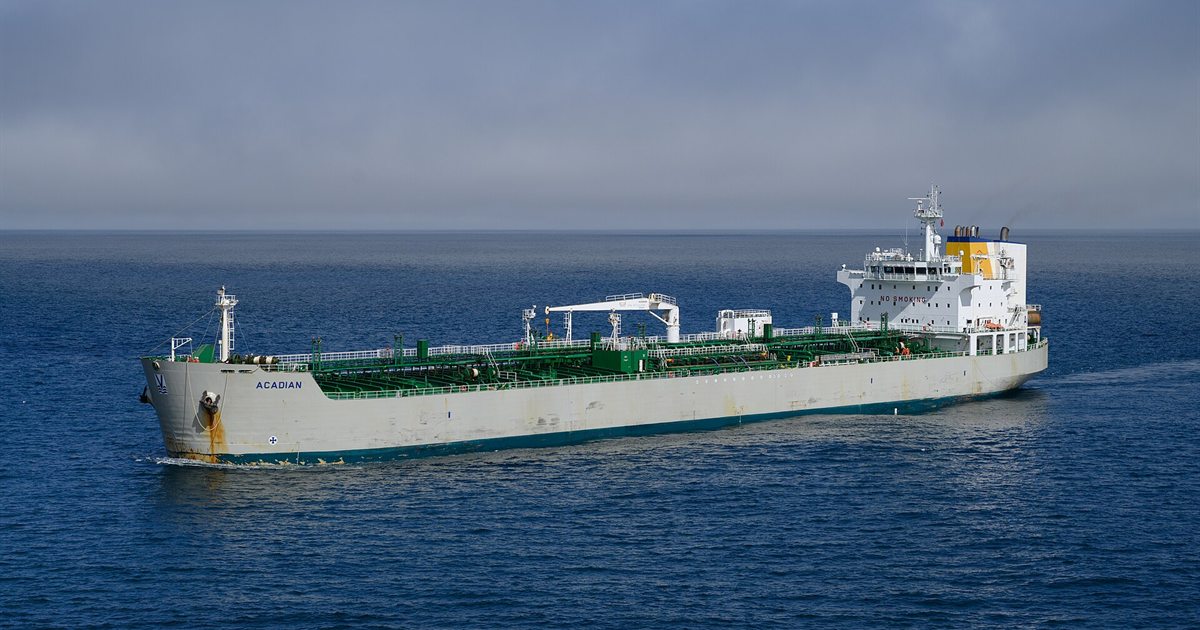
Photo: Gordon Leggett / Wikimedia Commons, CC BY-SA 4.0, cropped
Oil Jumped 4% to $104 After a Record Week of Tanker Attacks. What It Means for Gas Prices and Your Portfolio
- Brent crude settled at $104.28 a barrel on October 8, 2026, up about 4% on the day. It touched roughly $105.
- Ten tankers were struck in the Strait of Hormuz between September 28 and October 4, according to Kpler. The previous weekly record was six.
- Only seven tankers passed through the strait on Tuesday, less than half the recent daily average.
- Before the war, the strait carried about 20% of the world's oil and fuel.
- Two days earlier, Brent had dipped to $99.57 after rich countries agreed to release emergency oil stocks faster.
What happened
Oil had a wild week.
- Tuesday, October 6: Brent crude slipped to $99.57 a barrel.
- Wednesday, October 7: it settled lower again after the International Energy Agency's member countries agreed to release emergency oil stocks faster.
- Thursday, October 8: it shot up about 4% and settled at $104.28, after touching roughly $105.
That's a $5 swing in two days.
Why it jumped
Record tanker attacks. The data firm Kpler counted ten tankers struck in the Strait of Hormuz in the week of September 28 to October 4. The most in any earlier week was six.
Ships are staying away. Just seven tankers made the passage on Tuesday. That's less than half the recent average.
A hurricane. A storm heading for the US Gulf Coast forced some offshore oil platforms to shut down.
The strait matters because of geography. It's a narrow channel between Iran and Oman. Before the war that began in February, about a fifth of the world's oil and fuel sailed through it.
Why it keeps swinging
Two forces are pulling against each other.
Pushing prices up: every attack makes shipowners and insurers more nervous. Less oil gets out.
Pushing prices down: governments are releasing oil from emergency reserves, and exporters outside the Gulf are pumping more.
There was also a political signal. President Trump said on Thursday that the US would not launch an attack on Iran before November's midterm elections. Traders read that as lowering the odds of a wider war in the next few weeks.
When headlines flip that quickly, prices do too.
Who wins when oil is above $100
- Oil producers. Their costs don't change much, so higher prices go almost straight to profit. This is why energy is expected to have the strongest profit growth of any sector this earnings season.
- Oil-producing regions. Alberta added 23,000 jobs in September while the rest of Canada lost them.
- Tanker owners willing to take the risk. Shipping rates rise sharply.
Who loses
- Airlines. Delta said this week its fuel bill rose 62% and cut its profit forecast.
- Truckers and delivery companies. Diesel is their biggest cost after wages.
- Anyone who makes things. PepsiCo's finance chief said commodity costs keep climbing.
- Drivers and households. Money spent on gasoline isn't spent elsewhere.
- Bond investors and borrowers. Expensive oil feeds inflation, which keeps interest rates high. The 10-year Treasury yield hit its highest since 2002 this week.
What it means for you
If you own a broad index fund: energy is a small slice of the S&P 500, roughly 3% to 4%. It's a much bigger slice of Canada's TSX. Canadian index investors are getting more of the upside.
If you're thinking of buying energy stocks now: the easy gains came when oil first spiked. Today's share prices already assume oil stays high. If the strait calms down, they can fall quickly. We covered that risk in oil's whipsaw last week.
If you're thinking of buying an oil ETF: funds that hold oil futures don't track the oil price neatly over long periods. They're trading tools, not long-term holdings.
If you're a driver: pump prices follow crude with a delay of a week or two. A move from $100 to $104 is small. Sustained moves are what matter.
What to watch
- Daily tanker counts through the strait. That's the clearest sign of whether oil is getting out.
- The Gulf hurricane. Shut-in production usually returns within days once a storm passes.
- Emergency stock releases. They cap prices for a while, but reserves are finite.
Frequently asked questions
What is the price of oil right now?
Brent crude, the global benchmark, settled at $104.28 a barrel on October 8, 2026, up about 4% on the day. US crude (WTI) traded near $90. Prices have been swinging by several dollars a day.
Why did oil prices jump this week?
Attacks on tankers in the Strait of Hormuz hit a record, with ten ships struck between September 28 and October 4. Fewer ships are willing to make the trip. A hurricane near US offshore oil fields in the Gulf of Mexico also forced some production to shut down.
Why is the Strait of Hormuz so important?
It is a narrow waterway between Iran and Oman. Before the war, ships carrying about 20% of the world's oil and fuel passed through it. There is no easy alternative route for most of that oil.
Do energy stocks go up when oil prices rise?
Usually, because oil producers earn more on every barrel. But the link is loose. Energy stocks often move less than oil itself, since investors doubt that very high prices will last. Refiners, pipelines and producers also respond differently.
How does expensive oil affect the rest of my portfolio?
It raises costs for airlines, truckers, cruise lines and manufacturers, and leaves households with less to spend. It also pushes inflation up, which keeps interest rates high. That combination tends to weigh on stocks outside the energy sector.
Primary sources
- Reuters via US News — Oil rises as Middle East supply concerns persist amid shipping attacks (Oct. 7, 2026)
- CNN — Oil prices jump amid record tanker attacks in Hormuz (Oct. 8, 2026)
- Al Jazeera — Hormuz ship attacks surge: Are increased oil exports sustainable? (Oct. 6, 2026)
- Reuters via Investing.com — Shares slip as oil jumps and bond yields stay high (Oct. 8, 2026)
Data & disclaimer: This article is for educational purposes only and is not financial or investment advice. Figures reflect data available as of Oct 9, 2026, and conditions change — always confirm current pricing, rates and rules with the provider before you act. Written by Elizabeta Dimoska. See our editorial standards and disclosure.
Comments