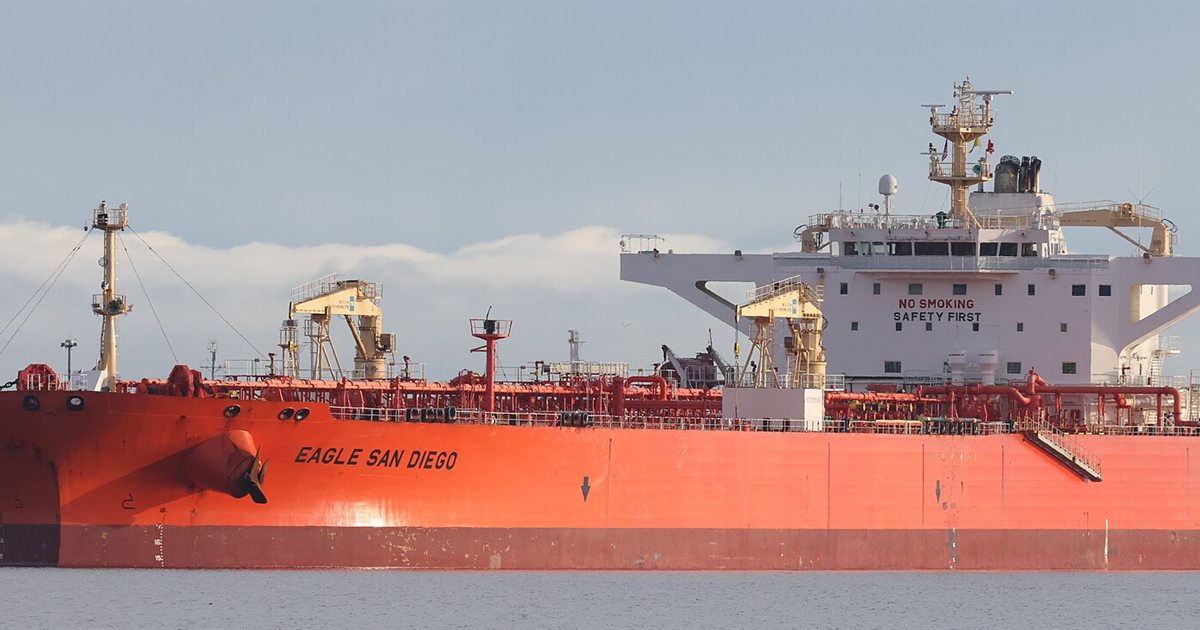
Photo: Jordanroderick / Wikimedia Commons (public domain)
Oil Went From $108 to Under $100 and Back to $102 in One Week. Here's What Energy Investors Should Do With That
- On September 26, 2026, President Trump rejected Iran's proposal to reopen the Strait of Hormuz within seven days in exchange for sanctions relief and an end to the US naval blockade.
- Brent crude jumped more than 3% on Monday, September 28, to nearly $108 a barrel.
- By Thursday, October 1, Brent was trading around $99 to $100.
- Brent settled at $102.25 on Friday, October 2, roughly flat on the week. US crude (WTI) settled at $91.11, down about 1.4% on the week.
- About one-fifth of the world's oil passed through the Strait of Hormuz before the conflict began in late February.
One week, three different oil prices
Here's how the week went for Brent crude, the global benchmark:
| Day | Brent | What happened |
|---|---|---|
| Friday, Sept. 25 | Around $102 | Markets waiting on Iran talks |
| Monday, Sept. 28 | Nearly $108 | Trump rejects Iran's proposal |
| Thursday, Oct. 1 | About $99 to $100 | Prices fade as bond yields surge and reports of emergency reserve releases circulate |
| Friday, Oct. 2 | $102.25 | Back where it started |
A round trip of almost $10 a barrel, and the week ended roughly flat. US crude, called WTI, settled at $91.11, down a little over 1%.
What set it off
Iran had offered to reopen the Strait of Hormuz and return to nuclear talks within seven days. In exchange, it wanted the US to lift its naval blockade of Iranian ports, ease sanctions on Iranian oil, and observe a ceasefire.
On Saturday, September 26, President Trump said no. "I'd like to make a deal, too," he said. "But that deal would not be acceptable."
When markets opened Monday, traders who had bet on a deal rushed to buy oil back. Brent jumped more than 3%.
The strait matters because about one-fifth of the world's oil used to pass through it. Shipping has dropped sharply since the conflict began in late February.
Why the spike didn't hold
A few things pulled prices back down:
- Some ships are getting through. Al Jazeera reported 132 transits in the week of September 21-27, up from 116 the week before.
- Emergency supplies. Reports of strategic reserve releases weighed on US crude in particular.
- A weaker economy needs less oil. The US added only 29,000 jobs in September.
- Iran says it's still waiting. Tehran said it expected a "definitive" US response, which kept the door open a crack.
What $100 oil does to everything else
Oil isn't just a number for traders. It's the main reason interest rates are rising around the world this year.
- Gasoline and diesel cost more, which raises the price of anything that's shipped.
- Eurozone inflation hit 3.8% in September, with energy up 18.8%.
- Central banks have responded with rate hikes: the Fed, the ECB and others.
- Higher rates push up mortgage costs and weigh on stocks.
If the strait reopens and oil falls, that whole chain could run in reverse. That's why every headline about Iran moves stocks, bonds and currencies, not just oil.
What should an investor do?
Don't trade the headlines. This week is the proof. Someone who bought on Monday's spike was down about 8% by Thursday. Someone who sold on Thursday missed Friday's bounce. The news moves faster than you can.
Know what you already own. Energy is about 3% to 4% of the S&P 500 and roughly a sixth of Canada's TSX. If you hold a Canadian index fund, you have plenty of oil exposure already.
Understand the two-way risk. Energy producers are earning record cash at these prices. But their share prices assume oil stays high. A peace deal would be great for the world and bad for oil stocks. We walked through that scenario in What Happens to Energy Stocks if Hormuz Reopens?
If you want more energy exposure, keep it simple. A sector ETF spreads your bet across dozens of producers, pipelines and refiners. Pipelines and other "midstream" companies get paid for moving oil and gas, so their income is steadier than drillers' when prices swing.
Think of energy as a hedge, not a bet. A modest energy position tends to do well when inflation surprises to the upside, which is when the rest of your portfolio often struggles. That's a reason to hold some. It isn't a reason to hold a lot.
What to watch
- Any US response to Iran's latest proposal
- Weekly tanker transit counts through the strait
- Mid-October inflation data in the US and Canada
- Third-quarter earnings from the big oil companies later this month
Frequently asked questions
What is the price of oil in October 2026?
Brent crude, the international benchmark, settled at $102.25 a barrel on October 2, 2026. West Texas Intermediate, the US benchmark, settled at $91.11. Prices change daily.
Why did oil prices jump at the end of September 2026?
On September 26, President Trump rejected an Iranian proposal to reopen the Strait of Hormuz within a week in return for sanctions relief and an end to the US blockade of Iranian ports. Hopes for a quick deal faded, and Brent rose more than 3% to nearly $108 on September 28.
Why is the Strait of Hormuz so important for oil?
It's a narrow waterway between Iran and Oman. Before the conflict, about one-fifth of the world's oil supply passed through it. Commercial shipping has dropped sharply since fighting began in late February, which has kept oil prices high.
Should I buy energy stocks when oil is above $100?
Energy company profits are strong at these prices, but their share prices already reflect that. If a deal reopens the strait, oil could fall quickly and energy stocks with it. Many investors hold a modest energy position through a broad index fund or a sector ETF and don't try to time headlines.
How do oil prices affect inflation and interest rates?
Higher oil raises the cost of gasoline, shipping and heating, which lifts inflation. That has pushed central banks, including the Federal Reserve and the European Central Bank, to raise interest rates in 2026. Energy prices in the eurozone were 18.8% higher than a year earlier in September.
Primary sources
- Al Jazeera — Oil prices surge after Trump rejects Iran's plan to reopen Strait of Hormuz (Sept. 28, 2026)
- EnergyNow — Oil ends volatile week mixed; Brent holds above $102 (Oct. 2, 2026)
- NPR — Trump rejects Iran's latest ceasefire proposal (Sept. 28, 2026)
- Yahoo Finance UK — FTSE 100 today (Brent at $99.44 on Oct. 1, 2026)
Data & disclaimer: This article is for educational purposes only and is not financial or investment advice. Figures reflect data available as of Oct 3, 2026, and conditions change — always confirm current pricing, rates and rules with the provider before you act. Written by Elizabeta Dimoska. See our editorial standards and disclosure.
Comments