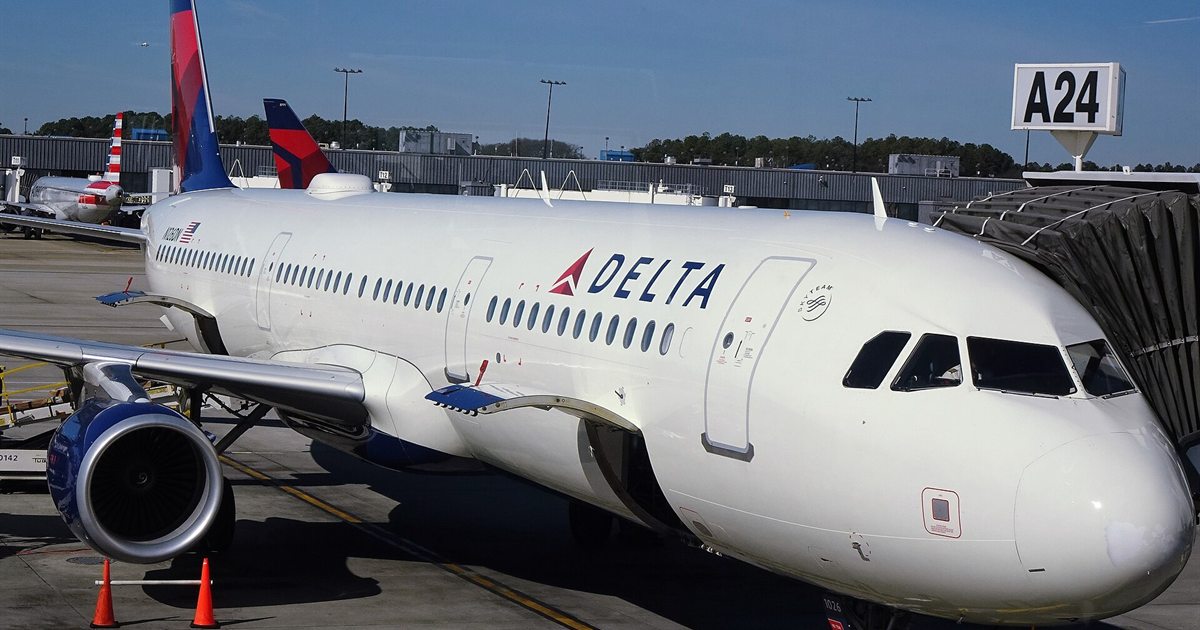
Photo: Charles / Wikimedia Commons, CC BY 2.0, cropped
Delta's Fuel Bill Jumped 62% and It Cut Its Profit Forecast by a Quarter. The Stock Went Up Anyway
- Delta earned an adjusted $1.72 per share in the third quarter of 2026. Analysts expected about $1.75. It's Delta's first miss in two years.
- Fuel costs rose 62% from a year ago. The adjusted operating margin shrank to 9.4%.
- Net income fell to $756 million, or $1.15 a share, from $2.17 a share a year earlier.
- Delta cut its 2026 profit forecast to $5.10 to $5.60 a share, from $6.50 to $7.50 in July.
- The stock rose about 4% on October 9. The CEO said demand is strong and fares are still rising.
The results
Delta reported July through September results on Friday morning, October 9.
| Q3 2026 | What analysts expected | |
|---|---|---|
| Adjusted earnings per share | $1.72 | About $1.75 |
| Adjusted revenue | $17.59 billion | $17.67 billion |
| Net income per share | $1.15 | (was $2.17 a year ago) |
| Adjusted operating margin | 9.4% | |
| Free cash flow | $463 million | (down 44%) |
A small miss on both lines. It's Delta's first in two years.
One line explains it: fuel
Delta's adjusted fuel bill was 62% higher than a year ago.
Jet fuel is made from crude oil. Oil has been above $100 a barrel for much of the time since the war with Iran began in February, and it jumped again this week.
Fuel is one of an airline's two biggest costs, along with wages. When it rises that fast, profit shrinks even if every seat is sold.
The forecast cut
This is the bigger news.
| Delta's forecast for 2026 earnings per share | |
|---|---|
| In July | $6.50 to $7.50 |
| Now | $5.10 to $5.60 |
At the midpoint, that's about 24% lower. Delta also said the fourth quarter will bring in $1.15 to $1.65 a share, below what analysts had pencilled in.
So why did the stock rise 4%?
It sounds backwards. It's actually a common pattern.
1. Everyone could see it coming. Fuel prices are posted every day. Investors had already marked the stock down for it.
2. Demand is fine. CEO Ed Bastian said people are still booking and fares are still going up. Delta's problem is costs, not customers. Costs can reverse quickly if oil falls. Lost customers are much harder to win back.
3. The uncertainty is gone. Investors dislike not knowing. A clear, lower number is easier to live with than a forecast nobody believes.
It's the same lesson as Tesla's delivery report last week. Stocks move on the gap between what happened and what was feared.
What it says about the wider economy
Delta is one of the first big companies to report each quarter, so investors read it as a signal.
The good sign: people are still spending on travel, even at higher prices. PepsiCo, by contrast, said shoppers in North America are holding back on snacks. Spending is holding up better for experiences than for everyday goods.
The warning: energy costs are eating into profits at companies that burn a lot of fuel. Expect to hear the same from truckers, cruise lines and shipping companies over the next few weeks.
What it means for you
If you're booking flights: don't count on prices dropping soon. Airlines are passing fuel costs through. Booking early and being flexible on dates matters more than usual.
If you own airline stocks: your investment is tied closely to the oil price. If the Strait of Hormuz calms down, airlines benefit fast. If it doesn't, more forecast cuts are possible.
If you own an index fund: airlines are a tiny part of the S&P 500. Meanwhile the energy companies in your fund are earning record profits from the same high prices. The two roughly offset. That's diversification doing its job.
What to watch
- United and American, which report later in October. Do they cut too?
- Jet fuel prices. They follow crude oil.
- Holiday bookings. The fourth quarter depends on Thanksgiving and December travel.
Frequently asked questions
Did Delta beat earnings in Q3 2026?
No. Delta reported adjusted earnings of $1.72 per share, slightly below the roughly $1.75 analysts expected. Adjusted revenue of about $17.59 billion was also a little under the $17.67 billion forecast. It was the first time in two years that Delta missed estimates.
Why did Delta cut its profit forecast?
Jet fuel. Fuel prices have climbed since the Iran war began in February, and Delta's adjusted fuel expense rose 62% from a year earlier. The company now expects 2026 adjusted earnings of $5.10 to $5.60 per share, down from the $6.50 to $7.50 it forecast in July.
Why did Delta stock go up after missing earnings?
Investors already expected a weak quarter because fuel prices are public. The miss was small, the lower forecast removed uncertainty, and management said travel demand is strong and fares are rising. When results are less bad than feared, a stock can rise on poor numbers.
Are airfares going up?
Delta's chief executive said fares appear to be rising further while fuel stays expensive. Airlines pass on fuel costs through higher ticket prices when demand is strong enough to allow it.
Are airline stocks a good investment when oil is high?
Airlines are among the most sensitive stocks to fuel prices, because fuel is one of their largest costs. Their profits can swing sharply from quarter to quarter. That makes them volatile, and historically the industry has been a difficult place for long-term investors.
Primary sources
Data & disclaimer: This article is for educational purposes only and is not financial or investment advice. Figures reflect data available as of Oct 9, 2026, and conditions change — always confirm current pricing, rates and rules with the provider before you act. Written by Elizabeta Dimoska. See our editorial standards and disclosure.
Comments