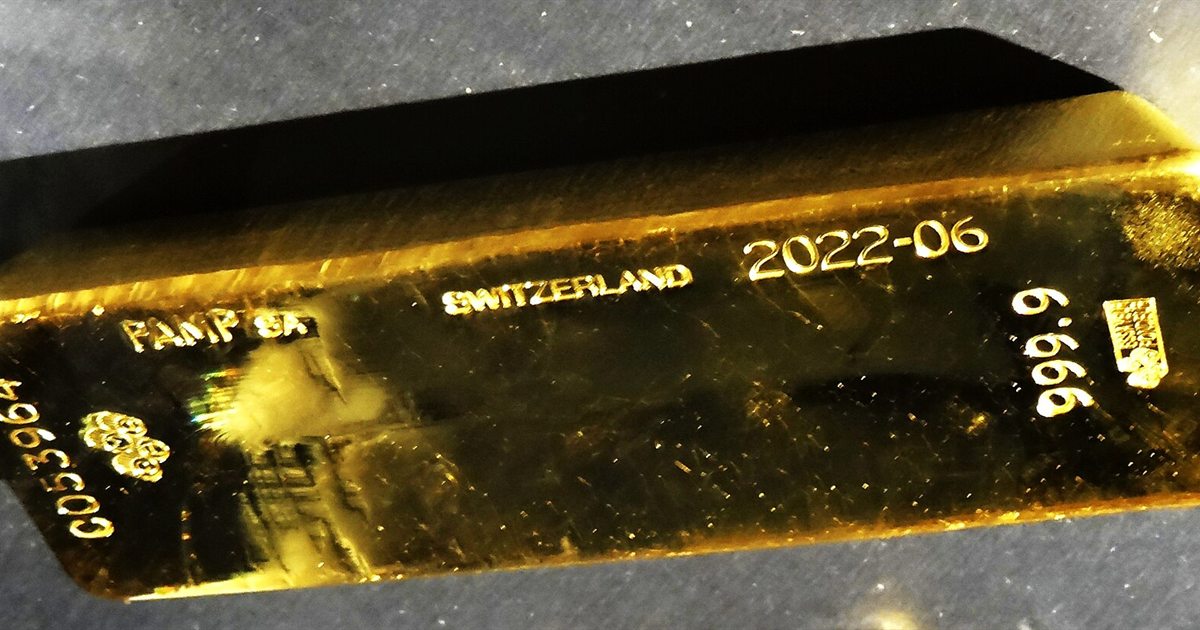
Photo: Ibex73 / Wikimedia Commons, CC BY 4.0, cropped
War, Inflation and an AI Selloff, and Gold Is Still 25% Below Its Record. Why the Safe Haven Isn't Working This Time
- Spot gold was around $4,140-4,175 an ounce in mid-to-late October 2026, roughly 25% below its record of about $5,600 set in late January.
- Gold was down about 0.4% for the week to October 16, despite the tech selloff.
- The 10-year Treasury yield is around 5.1%, after hitting 5.35% earlier in October, the highest since 2002.
- Central banks bought about 63 tonnes of gold in September, the most since November 2024, according to provisional World Gold Council data cited by analysts.
- Markets are weighing another Fed hike on October 28 or in December.
The puzzle
On paper, October 2026 should be a great month for gold:
- A war involving Iran, with oil above $110.
- US inflation at 3.7%, euro zone at 3.8%.
- A sharp AI and tech selloff that sent the Nasdaq to its worst week in months.
Instead, gold is stuck around $4,150 an ounce. That is roughly 25% below its record near $5,600, set in late January. In the week to October 16, while tech stocks were tumbling, gold actually fell about 0.4%.
The reason: bonds pay 5% and gold pays nothing
Gold's biggest competitor isn't stocks. It's safe bonds.
| Pays interest? | Current yield | |
|---|---|---|
| 10-year US Treasury | Yes | about 5.1% (hit 5.35% this month) |
| 3-month Treasury bill | Yes | near 4% |
| Best high-yield savings / money market | Yes | up to about 4% |
| Gold | No | 0% |
When a risk-free government bond pays more than 5%, holding gold means giving up that income. Economists call this the opportunity cost. The more yields rise, especially real yields (yields after inflation), the harder it is for gold to compete.
That's exactly what has happened in 2026. Yields jumped on oil-driven inflation, heavy government borrowing and the Fed's first rate hike in three years. Traders are now weighing another hike on October 28 or in December.
There was a brief bright spot on October 16: gold rose when the 10-year yield dipped to about 5.09% on AI-debt worries and the dollar weakened. It didn't last.
Central banks keep buying
The one steady source of demand is central banks. Provisional World Gold Council data cited by analysts showed central banks bought about 63 tonnes in September, the most in any month since November 2024. Many emerging market central banks are diversifying reserves away from the US dollar.
That buying puts a floor under prices, but it hasn't been enough to offset the pull of higher yields.
Will gold come back?
Forecasts are wide. Goldman Sachs had forecast about $4,900 by the end of 2026. Some banks have published targets near $6,000. Others, including some economists quoted this week, expect gold to drift lower as long as the Fed keeps hiking.
The historical pattern is clear enough: gold tends to rally when real yields fall, for example when a central bank starts cutting rates while inflation is still elevated. That's the scenario to watch.
What it means for investors
- Gold is insurance, not income. It can protect against a currency or confidence shock. It won't pay you to wait.
- Size it modestly. Many diversified portfolios hold somewhere between zero and 10% in gold.
- Use low-cost ETFs rather than coins or bars if you just want price exposure. Our guide on how to invest in gold compares the options.
- Know the environment. In a stagflation scenario with falling real yields, gold has historically shone. With rising real yields, it has struggled, as 2026 shows.
What to watch next
- October 28: the Fed's decision.
- Real yields on 10-year TIPS.
- World Gold Council quarterly demand report, due in late October or early November.
Frequently asked questions
What is the price of gold in October 2026?
Spot gold traded roughly between $4,140 and $4,175 an ounce in mid-to-late October 2026. That is about 25% below the record near $5,600 set in late January 2026. Exact record figures vary slightly by benchmark.
Why is gold down in 2026 despite the war and inflation?
Mainly because interest rates rose sharply. The 10-year US Treasury yield climbed above 5% and hit 5.35% in October, the highest since 2002, and the Fed has been raising rates. Gold pays no interest, so when safe bonds pay more than 5%, holding gold costs more in lost income.
Are central banks still buying gold?
Yes. Provisional World Gold Council data cited by analysts showed central banks bought about 63 tonnes in September 2026, the highest monthly total since November 2024. Central bank demand has been a steady support for gold for several years.
Is gold a good hedge against inflation?
Over very long periods gold has roughly kept pace with inflation, but it can lag badly for years, especially when real interest rates rise. In 2026 it has fallen even as inflation rose. It tends to do best when real yields are falling or confidence in currencies is weakening.
How much of a portfolio should be in gold?
There's no single answer. Many diversified portfolios hold somewhere between zero and 10% in gold, usually through a low-cost gold ETF. It can reduce swings in a crisis, but it produces no income. This is general information, not personal advice.
Primary sources
- CNBC — Gold gains on softer dollar, but heads for weekly fall (Oct. 16, 2026)
- FXStreet — Gold stumbles as US yields eclipse fading October Fed hike bets (Oct. 16, 2026)
- Seoul Economic Daily — Central bank gold buying hits two-year high, fueling record-price bets (Oct. 15, 2026)
- World Gold Council — Central bank gold statistics
- Fortune / AP — 10-year Treasury yield eases to about 5.08% (Oct. 19, 2026)
Data & disclaimer: This article is for educational purposes only and is not financial or investment advice. Figures reflect data available as of Oct 20, 2026, and conditions change — always confirm current pricing, rates and rules with the provider before you act. Written by Elizabeta Dimoska. See our editorial standards and disclosure.
Comments