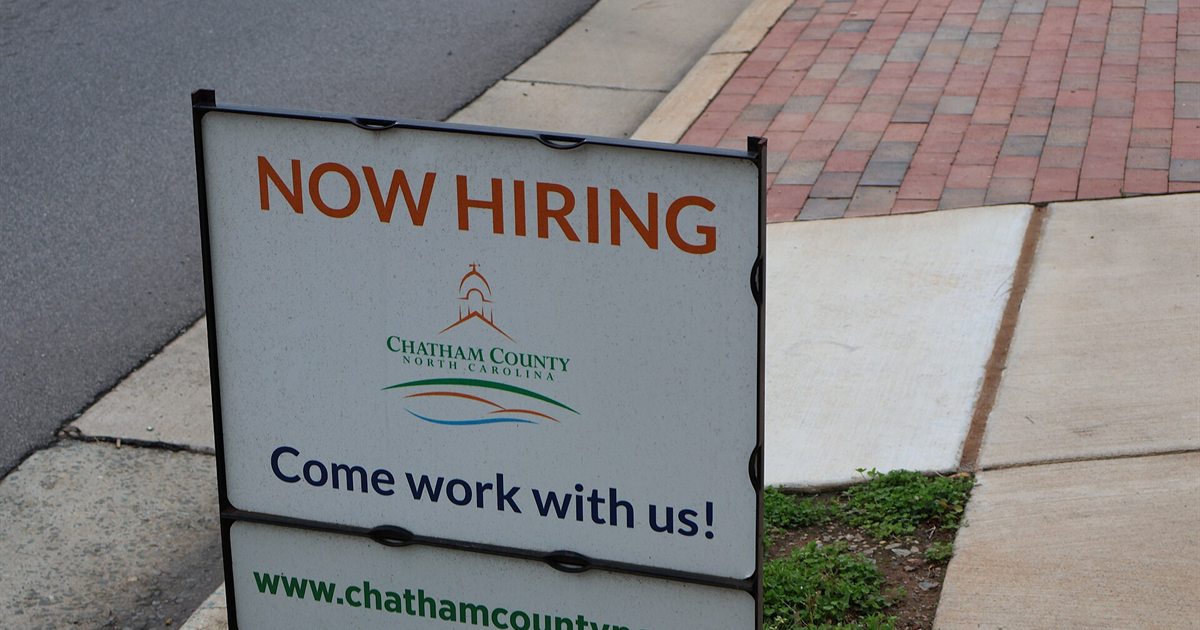
Photo: DiscoA340 / Wikimedia Commons (public domain)
The US Added Just 29,000 Jobs in September. Why Wall Street Cheered, and What It Means for Your Money
- US employers added 29,000 jobs in September 2026, per the Bureau of Labor Statistics. Economists had expected roughly 84,000 to 90,000.
- The unemployment rate rose to 4.2% from 4.1%. About 7.1 million people are unemployed.
- July was revised from a gain of 21,000 to a loss of 10,000. August was revised down to 133,000. Together the revisions removed 60,000 jobs.
- Average hourly earnings rose just 0.1% to $37.81, up 3.0% over 12 months.
- The Fed's rate is 3.75% to 4.00%. Its next decision is October 28. After the report, markets put the odds of no change at roughly 72% to 80%.
The number everyone was waiting for
On Friday, October 2, the Bureau of Labor Statistics said US employers added 29,000 jobs in September. Economists had expected about three times that.
The details were soft too. The unemployment rate rose to 4.2%. July, which was first reported as a small gain, is now a loss of 10,000 jobs. August was trimmed to 133,000. In total, the revisions erased 60,000 jobs that we thought existed.
Pay growth cooled as well. Average hourly earnings rose only 5 cents to $37.81, a 3.0% raise over the past year. With inflation running at 3.4% on the Fed's preferred measure, the typical paycheque isn't keeping up with prices.
Where the jobs were (and weren't)
| Industry | September change |
|---|---|
| Health care | +17,000 |
| Construction | +11,000 |
| Manufacturing | +9,000 |
| Financial activities | -7,000 |
Health care did most of the work again. Without it, hiring would have been close to zero. Manufacturing has added 72,000 jobs since its low last December.
So why did stocks go up?
It sounds backwards, but bad news for workers was good news for the market on Friday.
The Federal Reserve raised its rate to 3.75% to 4.00% on September 16 because inflation is too high. Investors were worried about another hike at the October 28 meeting. Higher rates make borrowing more expensive and tend to push stock prices down.
A weak jobs report changes the math. The Fed has two jobs: keep prices stable and keep people employed. When hiring slows this much, it's harder to justify another hike. After the report, markets priced roughly a 72% to 80% chance the Fed stands pat.
Tech stocks led the rally, and Bitcoin and gold both rose. For the full week, though, the picture was mixed: the Nasdaq gained 122 points to 27,190.86, while the S&P 500 slipped about 21 points to 7,722.72 and the Dow lost 652 points to 51,176.96.
What it means for you
If you have savings: rates on savings accounts, CDs and Treasury bills are likely to stay near current levels for now. That's still a good deal. See how to buy Treasury bills to lock in a yield.
If you're borrowing: mortgage rates follow long-term Treasury yields, which hit multi-decade highs this week before easing. One soft jobs report may take a little pressure off, but don't expect 6% mortgages soon. We explain why in The 30-Year Treasury Just Hit a 24-Year High.
If you're investing: one report doesn't change a long-term plan. If you invest a fixed amount every month, keep going. A slower economy is a reason to check that your emergency fund is in place, not a reason to sell.
If you're job hunting: this is a "low-hire, low-fire" market. Layoffs are low, with weekly jobless claims at just 197,000. But 27% of unemployed people have been looking for more than six months. If you have a job, it's a good time to build skills and savings before making a move.
What to watch next
- Mid-October: September consumer price index (CPI). A hot number could bring a hike back into play.
- October 28: the Fed's rate decision.
- Oil prices. Brent crude is still above $100 a barrel. Energy is the main reason inflation is high, and the Fed can't ignore it.
The bottom line
The job market is slowing, not crashing. For now that makes the Fed less likely to raise rates again this month, which is why markets cheered. But inflation is still above 3%, and the Fed hasn't said it's done. Keep your plan boring: steady contributions, a cash cushion, and no big bets on what the Fed does next.
Frequently asked questions
How many jobs did the US add in September 2026?
The US added 29,000 nonfarm jobs in September 2026, according to the Bureau of Labor Statistics. Economists had expected somewhere between 84,000 and 90,000. The average monthly gain over the past 12 months was 45,000.
What is the US unemployment rate now?
The unemployment rate was 4.2% in September 2026, up from 4.1% in August. It has stayed between 4.1% and 4.3% since March.
Why did stocks go up after a weak jobs report?
The Federal Reserve has been raising interest rates to fight inflation. A weak job market gives the Fed a reason to stop. Investors saw the report as a sign the Fed will hold rates steady on October 28, and lower rate expectations tend to help stocks, especially technology stocks.
Will the Fed raise rates in October 2026?
Markets think it probably won't. After the jobs report, futures pricing implied roughly a 72% to 80% chance that the Fed keeps its rate at 3.75% to 4.00% on October 28. That can change if inflation data comes in hot before the meeting.
Is the US heading into a recession?
Not necessarily. Hiring is slow, but layoffs are low: weekly jobless claims were 197,000, and second-quarter GDP growth was revised up to 2.2%. Economists describe this as a 'low-hire, low-fire' job market. It's weaker than a year ago, but it isn't a collapse.
Primary sources
- US Bureau of Labor Statistics — The Employment Situation, September 2026
- T. Rowe Price — Global Markets Weekly Update (week ended Oct. 2, 2026)
- Yahoo Finance — Stock market today: stocks rally as Fed rate-hike expectations fade (Oct. 2, 2026)
- Yahoo Finance — U.S. September 2026 jobs report: payrolls miss forecasts badly
Data & disclaimer: This article is for educational purposes only and is not financial or investment advice. Figures reflect data available as of Oct 3, 2026, and conditions change — always confirm current pricing, rates and rules with the provider before you act. Written by Elizabeta Dimoska. See our editorial standards and disclosure.
Comments