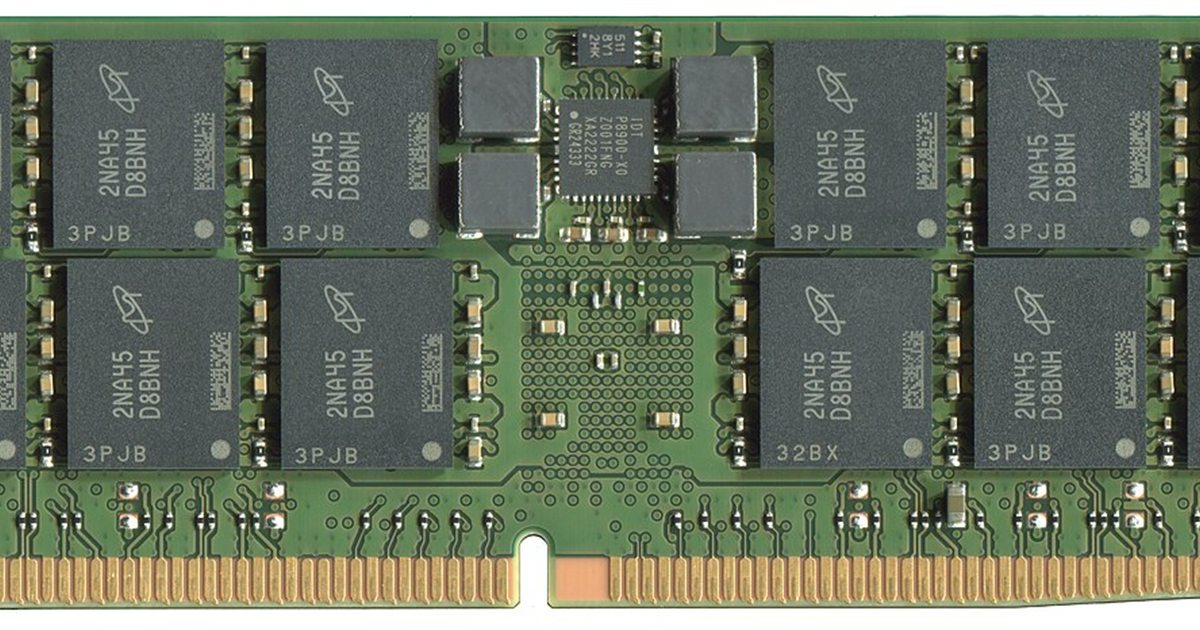
Photo: PantheraLeo1359531 / Wikimedia Commons, CC BY 4.0, cropped
Micron Made $54 Billion in One Quarter With an 87% Gross Margin. The Stock Didn't Move. Here's the Lesson
- Micron reported fiscal fourth-quarter revenue of $54.23 billion on September 30, 2026, versus $11.32 billion a year earlier and a $51.07 billion forecast.
- Adjusted earnings per share were $33.42, ahead of the $31.61 analysts expected. Gross margin was 87%.
- For the full fiscal year, revenue was $133.19 billion, up from $37.38 billion.
- Micron guided next quarter to about $61.5 billion in revenue and $38.15 in adjusted EPS. Wall Street had expected about $57 billion and $35.40.
- The stock was little changed the next day, as the 10-year Treasury yield hit a multi-decade high around 5.3%.
The numbers are hard to believe
On September 30, Micron reported results for its fiscal fourth quarter. A few comparisons:
| This quarter | Same quarter last year | |
|---|---|---|
| Revenue | $54.23 billion | $11.32 billion |
| Gross margin | 87% | |
| Adjusted EPS | $33.42 |
Sales were nearly five times what they were a year ago. For the full year, revenue was $133.19 billion, up from $37.38 billion. It was the first year Micron's DRAM memory business alone topped $100 billion.
An 87% gross margin means that for every dollar of chips sold, 87 cents was left after the cost of making them. That's the kind of margin software companies have, not factories.
And the outlook was better still. Micron expects about $61.5 billion in revenue next quarter. Analysts had pencilled in about $57 billion.
And then nothing happened
The next morning, Micron's stock was roughly flat.
If a company beats on sales, beats on profit, and raises its forecast, shouldn't the stock jump? Not always. This is one of the most useful things a new investor can learn.
Lesson 1: the price already knew
Stock prices are about expectations. Everyone knew memory prices were soaring. Korea publishes chip export data every ten days. Analysts had been raising their forecasts for months. By the time Micron reported, a blowout was the base case.
When a result matches what people already expect, it's said to be priced in. The stock moved months ago, when the expectation formed. The actual announcement is just confirmation.
Lesson 2: the market's mood matters
Micron reported into a rough day. The 10-year Treasury yield hit about 5.3%, a multi-decade high. The Dow fell about half a percent and the S&P 500 and Nasdaq each lost about 0.3%.
When investors can earn more than 5% from a government bond, they pay less for stocks, especially stocks whose value depends on profits years from now. Even a great earnings report struggles against that tide. We explain it in The 30-Year Treasury Just Hit a 24-Year High.
Lesson 3: investors are asking "how long?"
Nobody doubts memory is booming. The question is how long 87% margins can last.
Memory chips are a commodity. A chip from Micron does the same job as one from Samsung or SK Hynix. When prices are this high, all three build more factories. Eventually supply catches up and prices fall. It has happened in every previous cycle.
Micron says supply is still tight. But at a record margin, the stock is priced for the boom to continue. Investors want to know whether this is the middle of the cycle or the top, and one quarter can't answer that.
What it means for you
If you own Micron or a chip ETF: nothing in this report was bad. The business is doing extremely well. Just know that cyclical stocks often peak when the news is best, not worst.
If you own a broad index fund: you already own Micron, Nvidia and the rest. Semiconductors are a big slice of the S&P 500 and the Nasdaq 100. See how much AI you already own.
If you're thinking of buying after great earnings: remember this week. Good news you read in a headline is, almost by definition, already in the price. Learn the basics in how to read an earnings report.
The bottom line
Micron just delivered one of the strongest quarters any chip company has ever reported, and the market yawned. That's not a sign something is wrong with Micron. It's how markets work: stocks move on surprises, and this wasn't one.
Frequently asked questions
What were Micron's Q4 2026 earnings?
For the fiscal fourth quarter of 2026, Micron reported revenue of $54.23 billion and adjusted earnings of $33.42 per share. Both beat Wall Street forecasts of about $51.07 billion and $31.61. Gross margin was 87%.
Why didn't Micron stock go up after strong earnings?
Two reasons. First, investors already expected a blowout, so the good news was largely reflected in the price. Second, Treasury yields hit multi-decade highs the same day, which pulled the whole market down. When safe bonds pay more, investors pay less for future profits.
What does 'priced in' mean?
It means the stock price already reflects an expected event. If everyone expects a company to report great results, the stock rises before the report. When the results arrive and match those expectations, there's no new reason to buy, so the price may not move or may even fall.
Why are memory chip prices so high?
AI data centres need enormous amounts of fast memory, and only three companies make most of it: Micron, Samsung and SK Hynix. Demand has grown faster than they can build factories, so prices have surged. Micron said supply remains tight.
Is Micron a good stock to buy now?
We don't give individual stock advice. What we can say is that memory chips are a cyclical business. Profits are at a record now, and history shows they can fall sharply when supply catches up. Anyone buying should understand that risk and size the position accordingly, or own it through a diversified fund.
Primary sources
Data & disclaimer: This article is for educational purposes only and is not financial or investment advice. Figures reflect data available as of Oct 3, 2026, and conditions change — always confirm current pricing, rates and rules with the provider before you act. Written by Elizabeta Dimoska. See our editorial standards and disclosure.
Comments