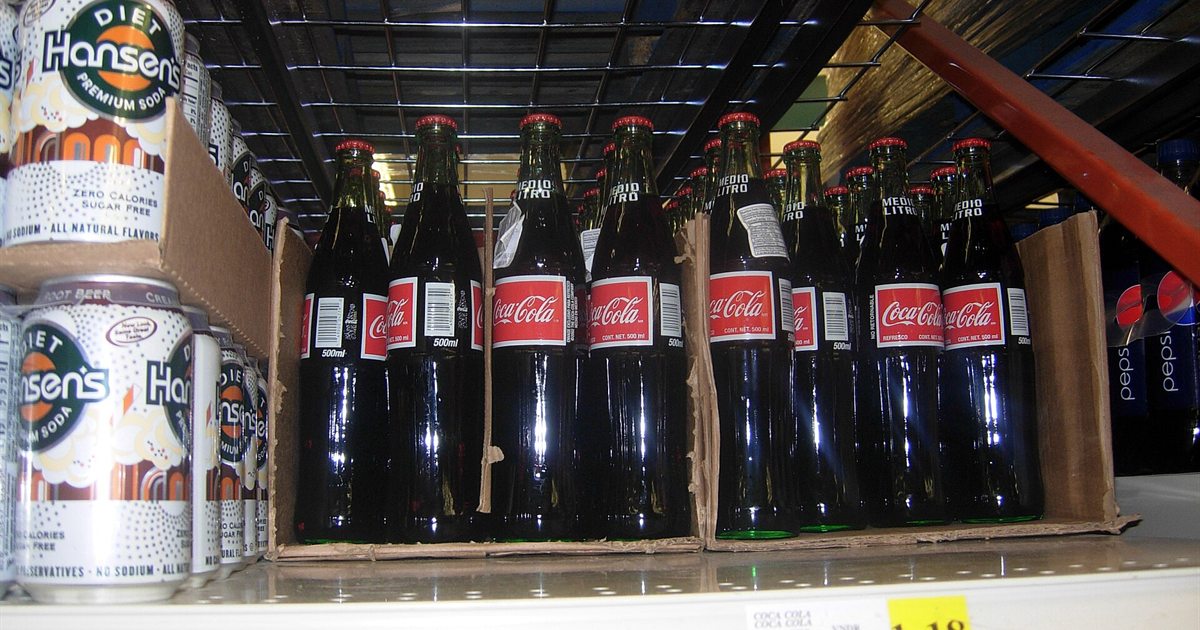
Photo: Rowanswiki / Wikimedia Commons (public domain)
Coca-Cola Beat and Raised in Q3 2026: Volume Up 5% Worldwide, but North America Went Flat
- Coca-Cola's Q3 2026 adjusted EPS was $0.91, vs. $0.88 expected. Revenue was $13.4 billion, vs. about $12.92 billion expected.
- Organic revenue rose 7%. Global unit case volume rose 5%, led by India, China, Mexico and Brazil.
- North America volume was flat, which the company partly blamed on the July 4 timing and a Topo Chico shortage.
- Coca-Cola Zero Sugar volume rose 16%; water rose 8%; sports drinks fell 3%.
- Coca-Cola raised 2026 guidance: comparable EPS growth of at least 11% and free cash flow of at least $13.0 billion.
The results
Coca-Cola reported third-quarter 2026 results on Tuesday, October 27, beating on both profit and revenue.
| Measure | Q3 2026 | Estimate |
|---|---|---|
| Adjusted EPS | $0.91 | ~$0.88 |
| Revenue | $13.4 billion | ~$12.92 billion |
| Organic revenue growth | +7% | — |
| Global unit case volume | +5% | — |
Sources: CNBC, company earnings call.
The shares slipped slightly despite the beat, as investors focused on slower North American demand.
Where the growth came from
Emerging markets led. Volume grew fastest in India, China, Mexico and Brazil. These are markets where rising incomes still mean more people buying packaged drinks.
Zero sugar keeps winning. Coca-Cola Zero Sugar volume jumped 16%, with gains in every region. Water rose 8%. Sports drinks fell 3%.
North America stalled. Volume was flat. Management pointed to two one-offs: the July 4 holiday falling in a way that pulled sales into the second quarter, and a months-long shortage of Topo Chico. Strip those out, the company says, and North America would have grown.
Guidance went up again
| Earlier 2026 outlook | New outlook | |
|---|---|---|
| Comparable EPS growth | 9%–10% | At least 11% |
| Free cash flow | ~$12.4 billion | At least $13.0 billion |
Management also flagged that the fourth quarter has six fewer days than last year, and that the planned refranchising of its African bottler (CCBA) will be a significant revenue headwind in 2027, though it lifts margins.
Coke vs Pepsi
Earlier this month, PepsiCo cut its guidance as snack volumes weakened (our report). Coca-Cola raised its guidance. Why the difference?
- Coke is almost all beverages, with a lighter, asset-light model that franchises bottling.
- Pepsi has a large snacks business in North America, where price-sensitive shoppers have pulled back.
- Coke's growth is more global, so it benefits from emerging-market demand when the US is soft.
What it means for you
Dividend investors: Coca-Cola has raised its dividend for more than 60 consecutive years. A higher free cash flow target supports that track record. See what a dividend is and how it's paid.
Consumer staples as ballast: Staples like Coke tend to hold up when markets fall because people keep buying drinks. They also lag in strong bull markets. A dividend ETF such as SCHD holds many of these names; see is SCHD a good ETF?.
The consumer signal: Flat North American volume fits a pattern: US shoppers are cautious, even as consumer confidence rebounded in October (our report).
What to watch next
- Q4 2026 results in February, with the first 2027 guidance.
- Progress on the CCBA refranchising.
- Whether North American volume returns to growth.
Frequently asked questions
Did Coca-Cola beat earnings in Q3 2026?
Yes. Adjusted EPS was $0.91 versus about $0.88 expected, and revenue was $13.4 billion versus about $12.92 billion expected. Organic revenue grew 7% and global unit case volume rose 5%.
What is Coca-Cola's 2026 guidance?
Coca-Cola raised its 2026 comparable EPS growth outlook to at least 11%, up from 9% to 10% earlier in the year, and raised its free cash flow target to at least $13.0 billion from about $12.4 billion.
Why was Coca-Cola's North America volume flat?
The company said North America would have grown if not for the timing of the Fourth of July holiday, which shifted some sales into the prior quarter, and a months-long shortage of Topo Chico sparkling water.
Which Coca-Cola products are growing fastest?
Coca-Cola Zero Sugar volume rose 16% in the quarter, with gains across every region. Water grew 8%. Sports drinks declined 3%.
Is Coca-Cola a good dividend stock?
Coca-Cola has raised its dividend for more than 60 consecutive years, making it one of the longest-running dividend growers in the US. Its steady demand makes it popular with income investors, but like any single stock it carries company-specific risk.
Primary sources
Data & disclaimer: This article is for educational purposes only and is not financial or investment advice. Figures reflect data available as of Oct 28, 2026, and conditions change — always confirm current pricing, rates and rules with the provider before you act. Written by Elizabeta Dimoska. See our editorial standards and disclosure.
Comments