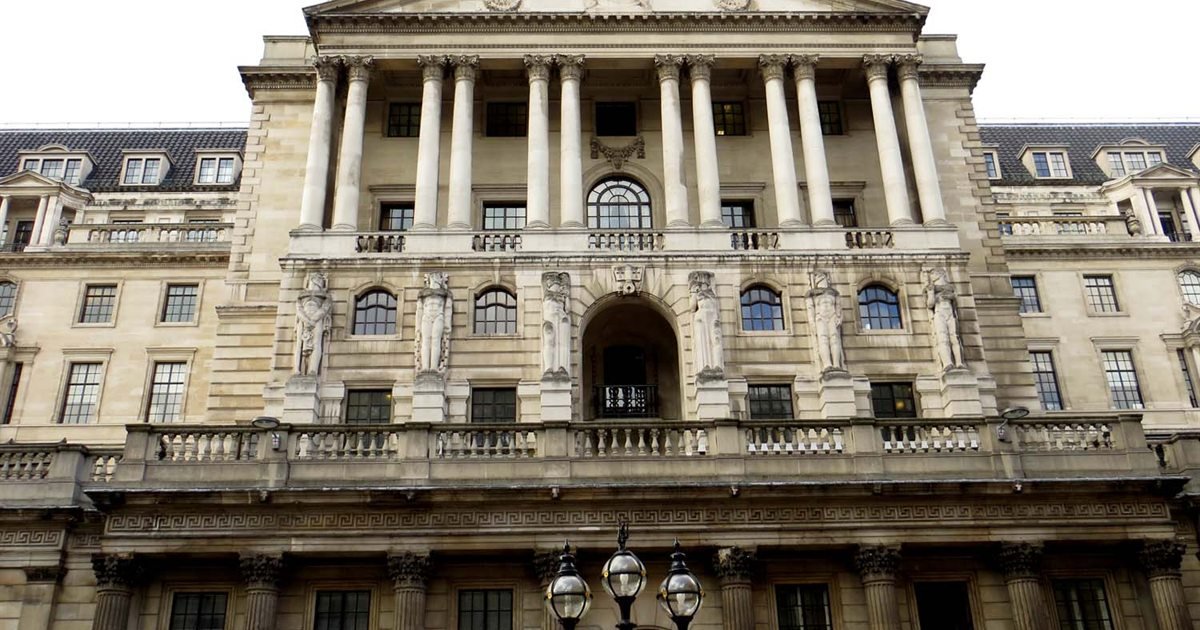
Photo: Steve Daniels / Wikimedia Commons, CC BY-SA 2.0, cropped
Bank of England Expected to Hike to 4% on Thursday: What It Means for UK Mortgages, Gilts and the FTSE
- The Bank of England announces its decision on Thursday, November 5, 2026, at 12:00 UK time (7:00 a.m. ET), alongside a new Monetary Policy Report.
- Bank Rate is 3.75%. In September the MPC held in a 6–3 vote, with three members backing a hike.
- Markets priced about a 94% chance of a 25 bp hike to 4.00% as of November 2. A Reuters poll in mid-October found 54 of 63 economists expected a hike.
- UK inflation rose to 3.5% in September from 3.1% in August, driven by energy costs linked to the conflict with Iran.
- Oxford Economics expects another hike in February to 4.25%.
What's happening Thursday
The Bank of England announces its interest rate decision on Thursday, November 5, at 12:00 UK time (7:00 a.m. ET), together with a new Monetary Policy Report and fresh economic forecasts.
Bank Rate is 3.75%. Almost everyone expects it to rise to 4.00%. Market pricing as of November 2 implied about a 94% chance of a quarter-point hike, and a mid-October Reuters poll found 54 of 63 economists expected one.
Why the Bank is set to hike
Inflation is going the wrong way. UK consumer prices rose 3.5% in the year to September, up from 3.1% in August. The main driver is energy: oil and gas prices jumped with the conflict involving Iran (our explainer on the 2026 oil shock).
September was close. The Monetary Policy Committee held at 3.75% in September in a 6–3 vote, with three members already voting to hike. It only takes two of the six to switch.
Others are moving. Australia's central bank hiked to an 18-year high on Tuesday (our report), and the Bank of Canada raised rates last week. The ECB held in October but may hike in December (coverage).
What to watch
- The vote split. A 9–0 or 8–1 vote for a hike would signal more to come. A narrow 5–4 would suggest the Bank is close to done.
- The forecasts. How high does the Bank think inflation goes, and for how long? It will also judge the effect of the October 28 Autumn Budget.
- Guidance. Oxford Economics expects another hike in February to 4.25%. Any hint of that would push gilt yields up.
How UK markets are set up
Gilt yields have been under pressure. The 30-year gilt touched 6% around the budget (our report). The FTSE 100 rallied on Wednesday with the rest of Europe after the US midterms, trading above 10,700 in early trading, as banks gained and defence names fell (our report).
What it means for you
| If you have... | What a hike to 4% means |
|---|---|
| A tracker or variable mortgage | Payments usually rise within a month or two |
| A fixed-rate mortgage ending soon | New fixed deals depend on swap rates, which already price in this hike. Shop around early |
| Cash savings | Easy-access and fixed savings rates should improve |
| UK stocks | Banks may benefit; housebuilders and property stocks tend to lag |
| US or Canadian holdings of UK assets | A more hawkish Bank tends to lift the pound, raising their value in USD or CAD |
What to watch next
- Thursday, November 5, 12:00 UK: Decision, minutes and Monetary Policy Report.
- Mid-November: UK October inflation.
- December 17: The ECB's next decision; the BoE's next meeting is also in December.
Frequently asked questions
When is the next Bank of England interest rate decision?
The Bank of England announces its decision on Thursday, November 5, 2026, at 12:00 UK time (7:00 a.m. Eastern). A new Monetary Policy Report and press conference follow.
Will the Bank of England raise interest rates in November 2026?
Markets and most economists expect it to. Pricing as of November 2 implied about a 94% chance of a quarter-point hike from 3.75% to 4.00%, and 54 of 63 economists in a Reuters poll expected a rise.
Why is the Bank of England raising rates?
UK inflation rose to 3.5% in September from 3.1% in August, mainly because of higher energy prices linked to the conflict with Iran. The Bank wants to stop higher energy costs from feeding into wages and other prices.
What does a Bank of England rate rise mean for my mortgage?
Tracker and variable-rate mortgages usually rise soon after a Bank Rate increase. Fixed-rate deals are priced off gilt and swap rates, which already reflect expected hikes, so a widely expected move may not change new fixed rates much.
How does a rate hike affect UK stocks and the pound?
A hike that is fully expected tends to have little lasting effect. Banks can benefit from wider lending margins, while housebuilders and property companies tend to suffer. A more hawkish message than expected would typically support the pound.
Primary sources
- Bank of England — Monetary Policy Committee dates and announcements
- Office for National Statistics — Consumer price inflation, UK
- Rate Probability — BoE MPC meeting probabilities
- HomeOwners Alliance — Will the Bank of England raise interest rates on 5 November?
- Vantage Markets — Bank of England base rate on 5 Nov: What the 6-3 vote shows
Data & disclaimer: This article is for educational purposes only and is not financial or investment advice. Figures reflect data available as of Nov 4, 2026, and conditions change — always confirm current pricing, rates and rules with the provider before you act. Written by Elizabeta Dimoska. See our editorial standards and disclosure.
Comments