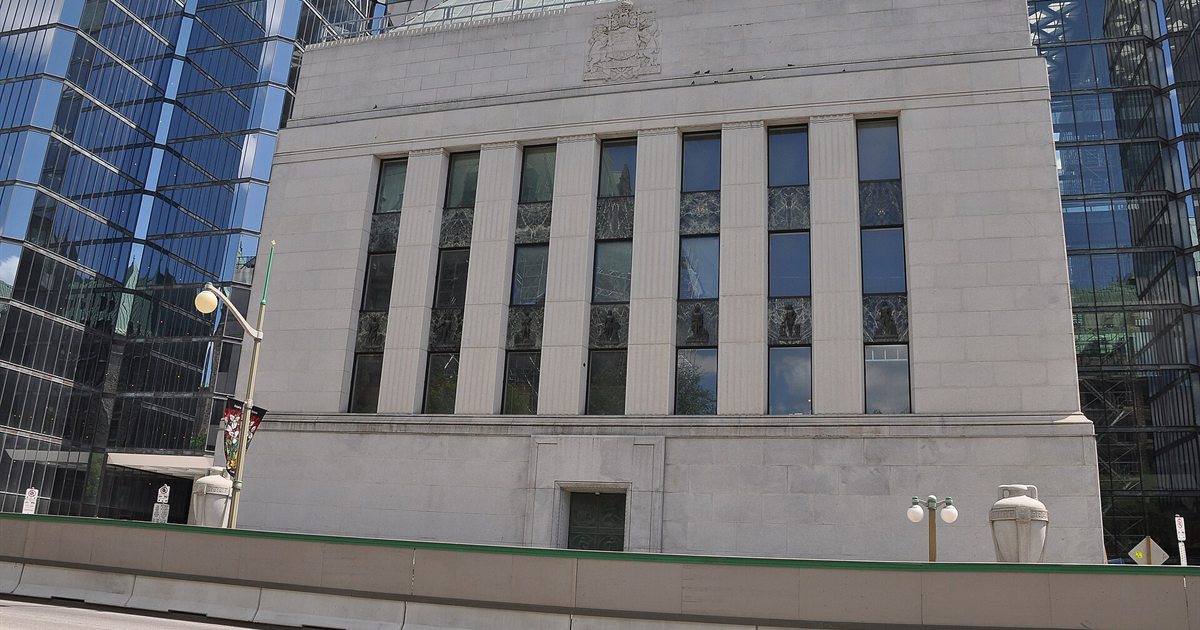
Photo: shankar s. from Dubai, united arab emirates / Wikimedia Commons, CC BY 2.0, cropped
Canadian Business Confidence Slipped After US Trade Talks Collapsed, Bank of Canada Survey Shows. Half of Firms Plan to Pass On Costs
- The Bank of Canada's Business Outlook Survey indicator rose to -0.33 in the third quarter from -0.38, released October 19, 2026.
- About three-quarters of interviews happened before Canada-US trade talks broke down on August 21. Firms surveyed afterward were more pessimistic.
- Roughly half of firms plan to pass some or all cost increases on to customers. Hiring plans stayed soft.
- Business and consumer inflation expectations rose. More than 50% of consumers expect a recession within 12 months.
- The Bank decides on rates October 28. Markets price a hold, with a possible 25 basis point hike in December.
What happened
The Bank of Canada published two surveys on Monday, October 19: its quarterly Business Outlook Survey of companies and its Canadian Survey of Consumer Expectations.
The headline business indicator improved to -0.33 from -0.38. A negative number means sentiment is still below its historical average, but it was moving in the right direction.
There is a big catch. About three-quarters of the interviews took place before trade talks between Canada and the United States broke down on August 21. Firms interviewed after that were noticeably gloomier.
What changed after the talks collapsed
After the breakdown, the US added new tariffs on some Canadian goods and Canada responded with counter-tariffs. The Bank said these were "dampening business sentiment" and weakening outlooks for exports and investment.
To check how much things had shifted, the Bank also polled about 340 business leaders in September. Their outlooks had deteriorated, export sales had weakened, and some of the summer's gains in sentiment had reversed. The Bank called it "a moderation rather than a fundamental shift."
Key findings
| Topic | What firms and consumers said |
|---|---|
| Overall indicator | Improved to -0.33 from -0.38 |
| Sales outlook | Better than in Q2, mostly before the talks collapsed |
| Hiring | Soft. Most firms plan to keep current staff, few plan to add |
| Wages | Expectations largely unchanged |
| Investment | Eased slightly, still described as robust |
| Prices | Roughly half plan to pass on some or all cost increases |
| Inflation expectations | Higher, for both firms and consumers |
| Recession | More than half of consumers expect one within 12 months |
Source: Bank of Canada via Canadian Press and Reuters, October 19, 2026.
Why the Bank cares about expectations
Inflation was 3.1% in September, but almost all of the rise came from gasoline (full CPI breakdown). On its own, a fuel spike can fade.
The danger is when people start to expect higher prices. Firms then build bigger price increases into their plans, and workers ask for bigger raises. Both surveys showed expectations moving up. That's why Governor Tiff Macklem has said he is ready to raise rates if energy costs start leaking into other prices.
What it means for investors
- TSX exporters: Manufacturers, autos and lumber are most exposed to tariffs. About 69% of Canadian exports go to the US (why that matters).
- Banks: Weak hiring and recession worries can mean higher loan-loss provisions. Canadian banks are a large share of the TSX.
- Energy and gold: High oil prices and the war help producers, which partly offsets the drag elsewhere on the index.
- Rates: Money markets price a hold on October 28 and lean toward a 25 basis point hike in December.
What it means for you
If you work in an export-heavy industry, now is a good time to top up your emergency fund. If you're a borrower, budget for the possibility of one more rate hike before rates come down. If you invest through a broad Canadian ETF, consider whether you also own enough outside Canada to balance the trade risk.
What to watch next
- October 28: Bank of Canada decision and Monetary Policy Report.
- Trade: any sign of talks restarting would lift exporters quickly.
- Early November: October jobs report.
Frequently asked questions
What is the Bank of Canada Business Outlook Survey?
It is a quarterly survey in which Bank of Canada staff interview roughly 100 businesses across the country about sales, hiring, investment, prices and inflation. The Bank combines the answers into a single indicator. It is one of the main inputs into interest rate decisions.
What did the Q3 2026 Business Outlook Survey show?
The overall indicator improved to -0.33 from -0.38, but most interviews took place before Canada-US trade talks broke down on August 21. A separate check of about 340 business leaders in September found outlooks had weakened since, which the Bank called a moderation rather than a fundamental shift.
Are Canadian companies raising prices?
Roughly half of surveyed firms said they plan to pass some or all of their cost increases on to customers, citing tariffs and energy. More firms than last quarter said competition limits how much they can raise prices.
Do Canadians expect a recession?
According to the Bank of Canada's Canadian Survey of Consumer Expectations, more than half of consumers expect a recession in the next 12 months, and long-term inflation expectations have risen.
Will the Bank of Canada hike rates in 2026?
Money markets price a hold on October 28 and a possible 25 basis point hike in December. The Bank has said it is ready to hike if higher energy prices start spreading into broader inflation. Rising inflation expectations in this survey are one of the signals it watches for.
Primary sources
- Bank of Canada — Business Outlook Survey, Third Quarter of 2026
- CTV News / Canadian Press — Sentiment improved, but new tariffs weigh on business outlook: BoC report (Oct. 19, 2026)
- Kitco / Reuters — Canadian firms' outlooks dimmed after trade talks collapse, BoC survey finds (Oct. 19, 2026)
- investingLive — Bank of Canada Q3 business outlook survey -0.33 vs -0.38 prior
Data & disclaimer: This article is for educational purposes only and is not financial or investment advice. Figures reflect data available as of Oct 20, 2026, and conditions change — always confirm current pricing, rates and rules with the provider before you act. Written by Elizabeta Dimoska. See our editorial standards and disclosure.
Comments