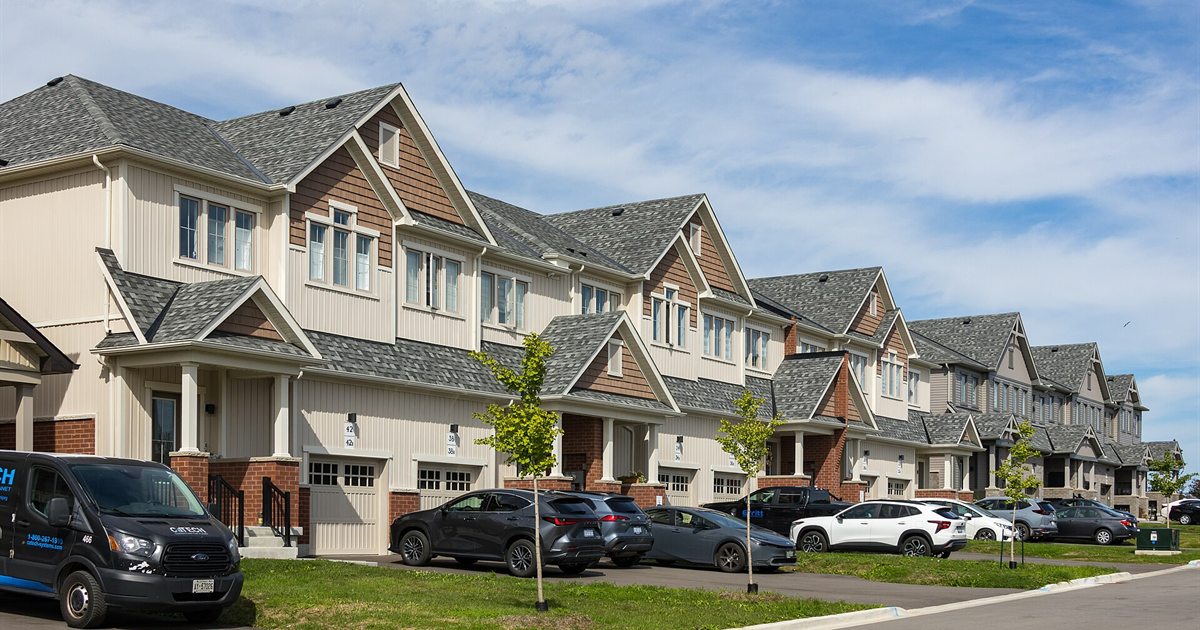
Photo: Dillan Payne / Wikimedia Commons, CC BY-SA 4.0, cropped
The Bank of Canada Just Said Housing Feels 'Like a Trap', and That Interest Rates Can't Fix It
- On October 1, 2026, Bank of Canada Senior Deputy Governor Carolyn Rogers gave a speech in Victoria called Canada's housing affordability dilemma.
- She said the Bank's interest rate is "too blunt" to fix affordability and that the situation feels "a bit like a trap."
- In 2000, housing investment was 4.3% of GDP and business investment in machinery and equipment was 8.3%. Today those shares are roughly reversed.
- During the pandemic, the average Canadian house price rose about 50% in two years. Residential mortgages make up about half of all bank lending.
- The Bank's policy rate is 2.25%. The next decision is October 28, 2026.
A central banker says the quiet part out loud
Central bankers usually speak carefully. On Thursday in Victoria, Carolyn Rogers, the Bank of Canada's second-in-command, was unusually direct.
Her speech was titled Canada's housing affordability dilemma. She opened by saying she had no solution to offer. If there were an easy one, she said, the problem would be fixed by now.
Then she described the bind Canada is in:
"Higher prices make housing less affordable and leave many households with less room for everything else. Lower prices weigh on consumer confidence, wealth and slow home sales activity and new construction."
In other words: if prices go up, young families can't buy. If prices go down, the two-thirds of Canadians who already own feel poorer and builders stop building. She said it feels "a bit like a trap."
Why interest rates can't fix it
Many Canadians hope the Bank of Canada will cut rates to make homes affordable. Rogers explained why that doesn't work:
- Lower rates make payments cheaper. But when there aren't enough homes, buyers use the extra room to bid higher. Prices rise and affordability doesn't improve.
- Higher rates cool prices. But they also cut how much buyers can borrow and make it more expensive for developers to build.
That's what she meant by calling the policy rate "too blunt." It moves the whole economy at once. It can't target housing.
The number that should worry you
Rogers shared one comparison that says a lot about the Canadian economy:
| 2000 | Today | |
|---|---|---|
| Housing investment, share of GDP | 4.3% | Roughly reversed |
| Business investment in machinery and equipment, share of GDP | 8.3% | Roughly reversed |
A generation ago, Canada invested about twice as much in tools, machines and technology as it did in housing. Now it's the other way around. Money that goes into bidding up houses is money that isn't making workers more productive, and productivity is what raises wages over time.
She also noted that mortgages are about half of all bank lending. That means a sharp fall in house prices wouldn't just hurt owners. It would hit the banks too.
What it means if you're trying to buy
Don't wait for the Bank of Canada to rescue you. Focus on what you control:
- Use the FHSA. You can put in $8,000 a year, deduct it from your income, and take it out tax-free for a first home. Start with how to open an FHSA, and see TFSA vs FHSA if you're not sure which account to fill first.
- Add the Home Buyers' Plan. You can also withdraw up to $60,000 from your RRSP for a first home.
- Budget at today's rates. Fixed mortgage rates follow bond yields, which are high right now.
- Keep a cushion. A house with no emergency fund is a fragile plan.
What it means if you already own
Your home may be most of your net worth. Rogers's speech is a reminder that policymakers are not trying to make prices fall, but they're not promising they'll keep rising either. If nearly all your wealth is in one house in one city, consider building some savings outside it, in a TFSA or RRSP.
What it means for investors
Canadian bank stocks and the TSX are heavily tied to housing. If you own a Canadian index fund, you already have a lot of exposure. See how concentrated the TSX is in banks.
What's next
The Bank's next rate decision is October 28. Markets are split on whether it holds at 2.25% or raises rates. We look at that in Canada's Economy Stalled in July.
Frequently asked questions
What did the Bank of Canada say about housing affordability?
Senior Deputy Governor Carolyn Rogers said on October 1, 2026 that there is no easy fix. Higher prices make homes less affordable, while lower prices hurt consumer confidence, household wealth and construction. She called the Bank's interest rate 'too blunt' a tool to solve the problem on its own.
Can lower interest rates make housing more affordable?
Only partly. Lower rates reduce monthly payments, but in a market without enough homes they also let buyers bid more, which pushes prices up. Higher rates cool prices but shrink how much people can borrow. That is the 'trap' Rogers described.
Who can fix housing affordability in Canada?
Rogers said the policy levers are spread across federal, provincial and municipal governments and many agencies. Zoning, permits, development charges, immigration levels, and tax rules all matter more for long-term supply than the central bank's interest rate.
Should I wait for house prices to fall in Canada?
Nobody can time the market. A better question is whether you can comfortably afford the payment at today's rates, with an emergency fund left over. If you're saving for a first home, the FHSA and the RRSP Home Buyers' Plan can help you build a down payment faster.
When is the next Bank of Canada rate decision?
October 28, 2026. The policy rate is currently 2.25%.
Primary sources
Data & disclaimer: This article is for educational purposes only and is not financial or investment advice. Figures reflect data available as of Oct 3, 2026, and conditions change — always confirm current pricing, rates and rules with the provider before you act. Written by Elizabeta Dimoska. See our editorial standards and disclosure.
Comments