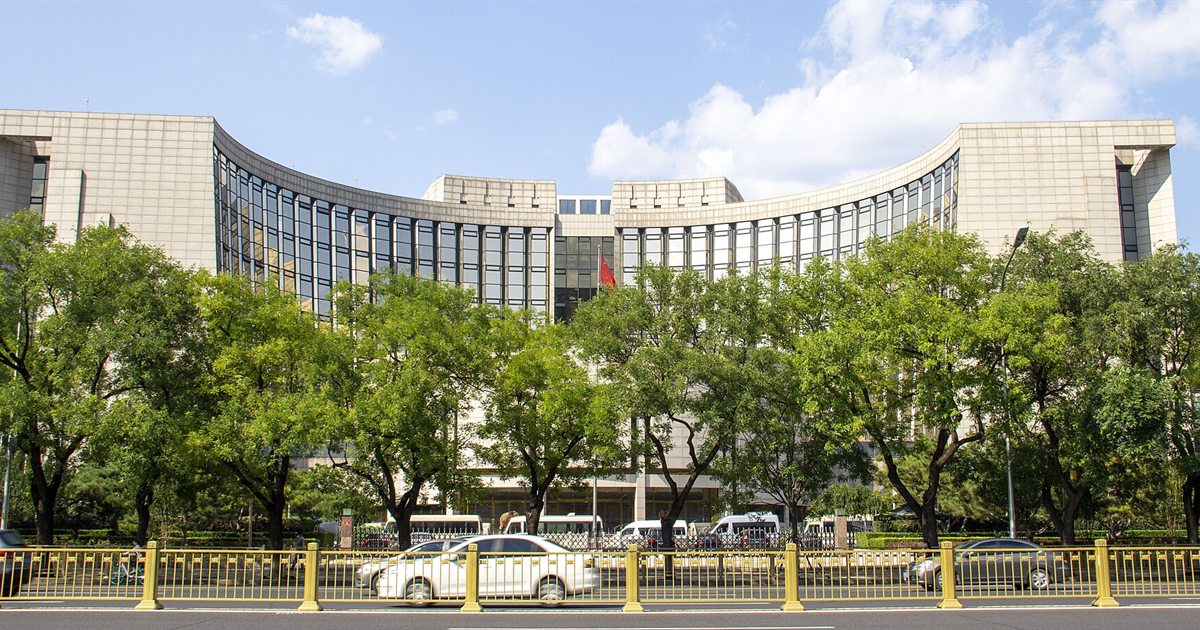
Photo: 維基小霸王 / Wikimedia Commons, CC BY-SA 4.0, cropped
China Just Launched Its Biggest Stimulus in Two Years. Investors Shrugged. Here's Why
- On September 30, 2026, China announced mortgage subsidies for home buyers, a 0.25-point cut in a key central bank lending rate to 1.5%, and expanded lending programs for infrastructure, technology and small firms.
- Roughly 500 billion yuan (about US$75 billion) in unused local government bond quotas is expected to be deployed.
- It's the largest package since September 2024. China's growth target is 4.5% to 5%, and growth slipped below that last quarter.
- The official manufacturing PMI rose to 50.1 in September from 49.8, the first reading above 50 in three months. The private RatingDog PMI hit 52.1, a five-month high.
- Markets were unimpressed. The CSI 300 fell 1.8% and the Hang Seng fell 2.19% in the holiday-shortened week. The 10-year bond yield stayed at 1.67%.
The announcement
On the last day of September, hours before the country shut down for its National Day holiday, Beijing announced a package of measures to boost the economy:
- Mortgage subsidies. The Ministry of Finance will help qualified buyers with their mortgage costs. The program targets smaller cities and has caps on home size and price.
- Cheaper lending. The central bank cut one of its lending rates by 0.25 points to 1.5% and gave banks more room to lend for infrastructure, technology and small businesses.
- Local spending. About 500 billion yuan (roughly US$75 billion) of unused local government bond quotas is expected to be put to work.
- Vouchers. Cities are handing out shopping coupons timed for the holiday.
Bloomberg called it the biggest stimulus effort since September 2024.
Why now
China's government wants the economy to grow 4.5% to 5% this year. Last quarter, growth slipped below that range.
The timing is deliberate. Golden Week is the country's biggest travel and shopping holiday. Getting people to spend during it sets the tone for the last three months of the year.
There were already some green shoots. The official manufacturing index rose to 50.1 in September. Anything above 50 means factories are growing, and it's the first time in three months. A private survey, the RatingDog PMI, came in at 52.1, a five-month high. Services improved too.
Why the market shrugged
If you expected a big rally, it didn't come.
| Market | Week's move |
|---|---|
| CSI 300 (mainland large companies) | -1.80% |
| Shanghai Composite | -1.15% |
| Hang Seng (Hong Kong) | -2.19% |
| China 10-year bond yield | Unchanged at 1.67% |
An index of property developers actually fell 4.7% right after the announcement before recovering.
Three reasons for the cool reception:
1. It's small. Economists described it as enough to "secure the target, not much more." Duncan Wrigley of Pantheon Macroeconomics said it should lift growth to the lower end of the goal but "won't solve China's structural imbalances."
2. The real problem is confidence. Chinese households have most of their wealth in property, and prices have been falling for years. A mortgage subsidy helps at the margin, but it doesn't make people feel richer.
3. The central bank's hands are partly tied. The US, Europe and Japan are raising interest rates. If China cuts too much, money flows out and the yuan weakens. ANZ's Zhaopeng Xing pointed to that constraint.
Early holiday data fit the pattern. Tourist sites reported record visitor numbers, but analysts cautioned that more visitors doesn't always mean more spending per person.
The bigger picture
China is easing while almost everyone else is tightening. The Fed, the ECB and the Bank of Japan have all raised rates this year to fight inflation. China has the opposite problem: prices are barely rising and demand is weak.
That contrast matters for investors. It means Chinese assets don't move in step with Western markets, which can be useful for diversification. It also means Chinese exports stay cheap, which keeps a lid on goods prices elsewhere.
What it means for your portfolio
Check what you own. China is one of the largest country weights in most emerging-markets ETFs. If you hold one, you already have exposure to Tencent, Alibaba and the big Chinese banks.
Cheap can stay cheap. Chinese stocks trade at lower prices relative to earnings than US stocks. They've done so for years. A low price isn't a reason to buy on its own.
Stimulus rallies have faded before. The September 2024 package sparked a huge rally that gave back much of its gains. This one didn't even get the rally.
Diversify, don't concentrate. A broad international fund gives you China alongside Japan, Korea, India and Europe. This week alone, Korea reported record exports while Chinese stocks fell. Owning the region beats picking a single country.
What to watch
- After the holiday: Golden Week spending totals
- Mid-October: third-quarter GDP
- Any follow-up. Beijing often adds measures in stages. Investors will want to see direct support for household incomes, not only cheaper loans.
Frequently asked questions
What stimulus did China announce in September 2026?
On September 30, 2026, China announced mortgage subsidies for qualified home buyers in smaller cities, cut the People's Bank of China's one-year pledged supplementary lending rate by 0.25 points to 1.5%, expanded bank lending programs, and is expected to deploy about 500 billion yuan of unused local government bond quotas. Local governments are also handing out consumer vouchers.
Why didn't Chinese stocks rally on the stimulus?
Investors saw it as enough to reach the low end of the 4.5% to 5% growth target, but not enough to fix the property slump or weak consumer spending. Pantheon Macroeconomics said it 'won't solve China's structural imbalances.' The CSI 300 fell 1.8% for the week.
What is China's Golden Week?
Golden Week is the week-long National Day holiday that begins October 1. Mainland Chinese markets close, and hundreds of millions of people travel and shop. It's watched closely as a measure of consumer confidence.
Is China's economy growing?
Yes, but slowly by its own standards. The government targets 4.5% to 5% growth for 2026, and growth dipped below that range last quarter. Manufacturing returned to expansion in September, with the official PMI at 50.1.
Should I invest in Chinese stocks?
That's a personal decision. Chinese stocks are a meaningful part of most emerging-markets ETFs, so you may already have some. They trade at lower valuations than US stocks, but they come with property-sector, policy and geopolitical risks. Most diversified investors hold China through a broad fund and keep it to a modest share of their portfolio.
Primary sources
- The Edge Malaysia (Bloomberg) — China's biggest stimulus push since 2024 fails to impress market
- Bloomberg — Beijing's mini-stimulus package: Next China (Oct. 2, 2026)
- Business Standard — China's factory activity rebounds in Sep with stimulus lifting outlook
- T. Rowe Price — Global Markets Weekly Update (week ended Oct. 2, 2026)
Data & disclaimer: This article is for educational purposes only and is not financial or investment advice. Figures reflect data available as of Oct 3, 2026, and conditions change — always confirm current pricing, rates and rules with the provider before you act. Written by Elizabeta Dimoska. See our editorial standards and disclosure.
Comments