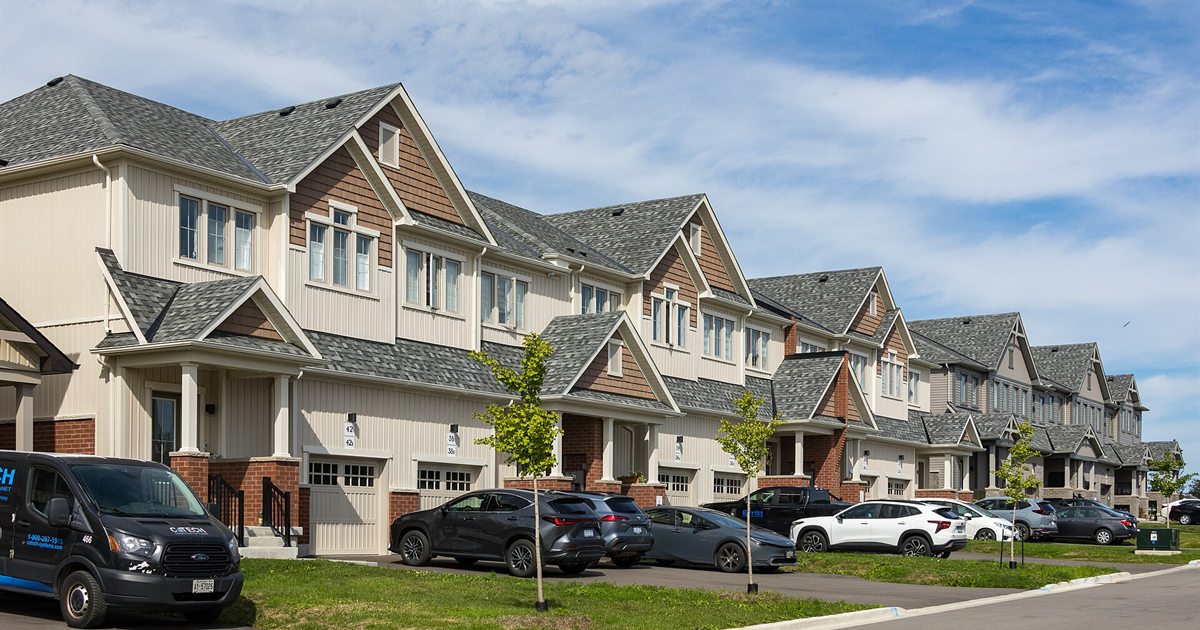
Photo: Dillan Payne / Wikimedia Commons, CC BY-SA 4.0, cropped
How to Renew Your Mortgage in Canada in 2026: A Step-by-Step Guide When Rates Might Rise
Start 120 to 180 days before your renewal date. 1. Check your balance, maturity date and whether you'll face payment shock at today's rates. 2. Get quotes from your current lender, at least two other lenders and a mortgage broker. 3. Use competing offers to negotiate; your lender's first renewal letter is rarely its best rate. 4. If another lender is cheaper, switch: since November 2024, uninsured borrowers doing a straight switch at renewal don't have to re-pass the stress test. 5. Choose fixed vs variable and the term based on how much payment risk you can handle. As of late October 2026, the best 5-year fixed rates are around 4.1%–4.6%, and variable rates follow prime (4.45%).
Why renewals matter right now
Many Canadians who locked in ultra-low rates in 2020 and 2021 are renewing in 2025–2026, often at rates roughly double what they had.
The backdrop as of late October 2026:
- Bank of Canada policy rate: 2.25%, with a decision today, October 28, and some economists expecting a hike (our preview).
- Prime rate: 4.45% at the big banks.
- 5-year Government of Canada bond yield: about 3.5%–3.6%, which drives 5-year fixed rates.
- Best 5-year fixed rates: roughly 4.1%–4.6%, depending on whether the mortgage is insured. Big-bank discounted rates averaged higher, around 5.2%.
Rates change daily; treat these as a snapshot.
Step 1: Know your numbers (120–180 days out)
Gather:
- Maturity date and remaining balance
- Remaining amortization (years left to pay off the loan)
- Current rate and payment
- Prepayment privileges you haven't used
- Whether your mortgage is insured (you put down less than 20%) or uninsured
Estimate your payment shock
| Balance | Years left | Payment at 2.5% | Payment at 4.5% | Increase |
|---|---|---|---|---|
| $400,000 | 20 | ~$2,120/month | ~$2,530/month | ~$410/month |
| $300,000 | 20 | ~$1,590/month | ~$1,900/month | ~$310/month |
Approximate monthly payments; Canadian mortgages compound semi-annually, so your lender's figures will differ slightly.
If that increase would strain your budget, plan now: build a cash cushion, consider a lump-sum prepayment, or ask about extending your amortization.
Step 2: Shop at least three quotes (90–120 days out)
- Your current lender. Ask for its best renewal rate, not the posted rate.
- Two other lenders, including a monoline lender or credit union.
- A mortgage broker. Brokers are usually paid by the lender and can compare dozens of options.
Ask each for a rate hold of 90–120 days. If rates rise before you renew, you keep the held rate; if they fall, you can usually get the lower one.
Step 3: Negotiate
Your lender's first renewal letter is an opening offer. Lenders count on borrowers signing without shopping.
- Tell your lender you have a lower written quote and ask it to match or beat it.
- Ask about cash-back, waived fees or better prepayment privileges if the rate won't budge.
- Get the final offer in writing.
Step 4: Switch if it's worth it
Switching used to be hard because you had to re-pass the mortgage stress test. Not anymore for most people.
Since November 21, 2024, OSFI no longer requires federally regulated lenders to apply the stress test when an uninsured borrower switches lenders at renewal without increasing the loan or amortization (a "straight switch"). Insured mortgages already had this flexibility.
Costs of switching can include an appraisal, legal or discharge fees, often a few hundred dollars, and many lenders cover them for switching customers. Compare the total cost, not just the rate.
Step 5: Choose fixed or variable
| Fixed | Variable | |
|---|---|---|
| Payment | Locked for the term | Moves with prime (or amortization changes) |
| If the BoC hikes | Protected | Costs rise |
| If the BoC cuts later | You don't benefit | Costs fall |
| Breaking the mortgage | Penalty can be large (IRD) | Usually 3 months' interest |
| Best for | Tight budgets, peace of mind | Flexible budgets, comfort with risk |
Fixed mortgage rates follow bond yields, not the Bank of Canada directly. Our guide on how bond yields set mortgage rates explains why fixed rates can rise even when the Bank holds.
Step 6: Pick the term
- 5-year fixed: the most common; predictable.
- 3-year fixed: often a slightly different rate; lets you re-shop sooner if you expect rates to fall by 2029.
- 1- or 2-year terms: a bet that rates will drop soon; more renewal risk.
There's no "right" term. Match it to how long you'll stay in the home and how much rate risk you can absorb.
Step 7: Sign and confirm
Before your maturity date, confirm in writing: rate, term, payment, amortization, prepayment privileges and penalties. Don't let the mortgage auto-renew by default.
Mistakes to avoid
- Signing the first letter. It's rarely the best offer.
- Starting too late. Federally regulated lenders only have to send a renewal statement 21 days before maturity, which isn't enough time to shop.
- Focusing only on rate. Penalties and prepayment rules can matter more.
- Adding debt at renewal without a plan. Refinancing changes the rules and may require the stress test.
- Ignoring your other savings. If you hold GICs or cash earning less than your mortgage rate, a lump-sum prepayment may make sense. Compare with a GIC ladder.
The bottom line
Start four to six months early, get three written quotes, negotiate, and switch if another lender is clearly better: for most uninsured borrowers, the stress test is no longer a barrier. Choose fixed if a higher payment would hurt; consider variable only if you can absorb increases while the Bank of Canada is still raising rates.
This article is educational and not personalized mortgage advice. Rates are a late-October 2026 snapshot; check current offers.
Frequently asked questions
When should I start my mortgage renewal in Canada?
About 120 to 180 days before your term ends. Many lenders will hold a rate for 90 to 120 days, and federally regulated lenders must send a renewal statement at least 21 days before maturity. Starting early gives you time to shop and switch.
Do I have to pass the stress test to switch lenders at renewal?
Not for a straight switch of an uninsured mortgage. Since November 21, 2024, OSFI no longer requires federally regulated lenders to apply the minimum qualifying rate when a borrower switches lenders at renewal without increasing the loan amount or amortization. Insured mortgages already had this flexibility.
Should I choose a fixed or variable mortgage at renewal in 2026?
It depends on your budget and risk tolerance. Fixed rates lock in your payment for the term, which protects you if the Bank of Canada keeps hiking. Variable rates follow prime and can fall if the Bank later cuts, but your payment or amortization can rise if it hikes. If a payment increase would strain your budget, fixed is the safer choice.
Can I negotiate my mortgage renewal rate?
Yes. Lenders' first renewal offers are often higher than their best available rates. Get written quotes from other lenders or a mortgage broker and ask your lender to match or beat them. Many borrowers save 0.25 to 0.50 percentage points just by asking.
What if my lender's renewal letter arrives and I do nothing?
Some lenders automatically renew you into a term, often a short or posted-rate term, if you don't respond. Always respond in writing and confirm the rate, term and payment before your maturity date.
Will my payment go up at renewal?
If you got your mortgage in 2020 or 2021 at a rate near 2%, likely yes. On a $400,000 balance with 20 years left, moving from 2.5% to 4.5% raises the monthly payment by roughly $400. Lengthening the amortization, making a lump-sum prepayment or choosing a different term can soften the increase.
Primary sources
- Financial Consumer Agency of Canada — Renewing your mortgage
- OSFI — Guideline B-20 and the removal of the stress test for straight switches at renewal
- Bank of Canada — Policy interest rate
- Ratehub — Best 5-year fixed mortgage rates in Canada
- Bank of Canada — Bond yields (Government of Canada benchmark)
Data & disclaimer: This article is for educational purposes only and is not financial or investment advice. Figures reflect data available as of Oct 28, 2026, and conditions change — always confirm current pricing, rates and rules with the provider before you act. Written by Elizabeta Dimoska. See our editorial standards and disclosure.
Comments