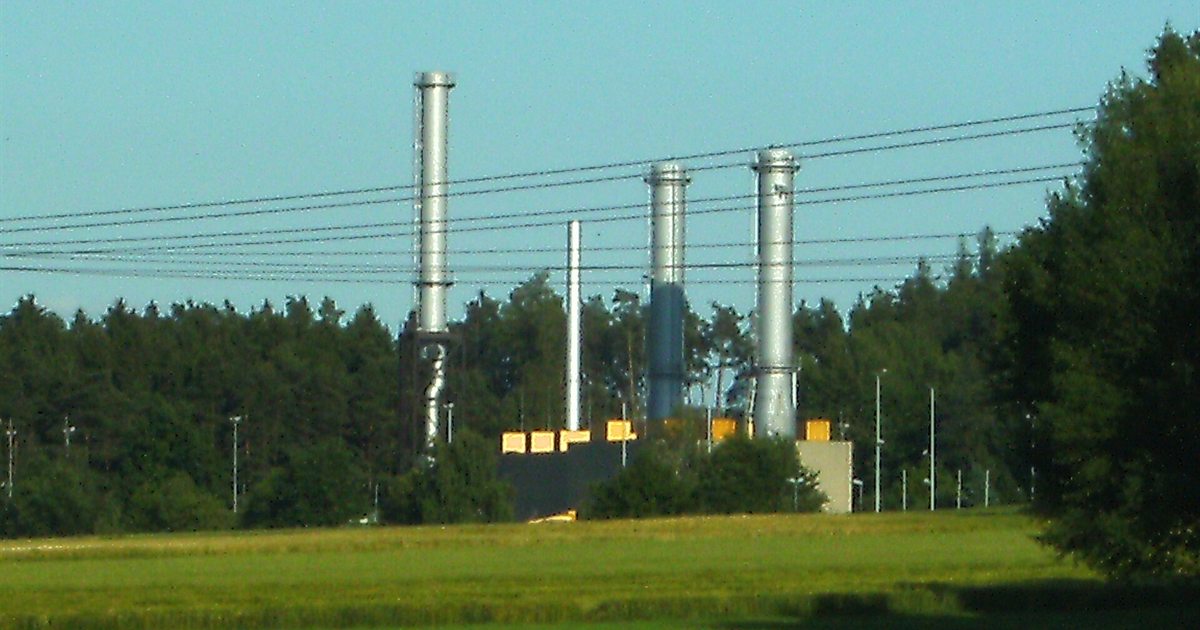
Photo: Zonk43 / Wikimedia Commons (public domain)
Enerflex Jumped 13% on a 1-Gigawatt Data Centre Deal. Natural Gas Is Becoming the AI Industry's Power Plant
- Enerflex (TSX: EFX, NYSE: EFXT) won a contract on October 13, 2026 to supply more than 1 gigawatt of behind-the-meter natural gas power generation for a North American data centre.
- Add a 450-megawatt award announced October 1, and its data-centre power backlog is now over 1.75 GW.
- The shares jumped about 13% on the day.
- Enerflex is investing about $100 million to expand its fabrication capacity, with $15 million already in its 2026 budget.
- Behind-the-meter means the power plant sits on the data centre's own site, so it doesn't have to wait for a grid connection.
What happened
Enerflex, a Calgary company best known for natural gas compression equipment, announced on Tuesday, October 13 that it had won a contract to supply more than 1 gigawatt of natural gas-fired power generation for a North American data centre.
The customer wasn't named. The shares, listed in Toronto as EFX and in New York as EFXT, jumped about 13%.
How big is 1 gigawatt?
One gigawatt is roughly enough electricity for several hundred thousand homes. A single large AI data centre campus can now use that much on its own.
Enerflex's recent wins:
| Date | Contract | Size |
|---|---|---|
| October 1, 2026 | Data centre gas power units | About 450 MW |
| October 13, 2026 | Separate data centre gas power units | Over 1,000 MW |
| Backlog | Behind-the-meter gas power projects | Over 1.75 GW |
Sources: Enerflex announcements via Proactive Investors and Yahoo Finance.
To build all of it, Enerflex is investing about $100 million to expand its fabrication plants, with $15 million already in its 2026 budget.
Why data centres are building their own power plants
AI data centres run around the clock and need enormous, steady power. The problem is the grid:
- Connections take years. In many regions, a new large grid hookup can take five years or more.
- Utilities are stretched. Adding that much demand forces new power plants and transmission lines, and someone has to pay for them. We covered that fight in who pays the power bill for data centres.
The workaround is behind-the-meter power: put gas-fired generators right on the data centre's site. No waiting for the grid.
Natural gas wins for now because it's fast to build, runs any time of day, and North America has plenty of it. Nuclear, including small modular reactors, is the longer-term hope, but those take years. See AI's power bottleneck.
Who benefits
- Equipment makers like Enerflex that build the generator packages.
- Natural gas producers, especially in Western Canada and the US, who sell more gas.
- Pipelines that carry gas to new data centre sites.
- Turbine and engine makers that supply the core machinery.
This is one reason energy has been a strong part of the TSX this year. See the TSX energy and gold rotation.
The risks
- Execution. Enerflex must build and deliver on time. Supply chains for turbines and engines are tight.
- Customer concentration. A few very large contracts make up the new business. If one is delayed or cancelled, it shows.
- AI spending cycles. If tech companies slow data centre construction, orders could dry up quickly.
- Climate policy. Gas plants emit carbon, and some buyers want cleaner options over time.
What it means for you
Small-company stocks swing hard. A 13% jump on one contract can reverse on the next headline. If you want this theme, a diversified energy or infrastructure fund is steadier than a single stock.
Learn the fuel. Our explainer on natural gas covers how gas prices work and which companies earn from them.
What to watch next
- More contract announcements, and whether customers are named.
- Enerflex's third-quarter results, for margins on the new power business.
- Natural gas prices as data centre demand grows.
Frequently asked questions
What contract did Enerflex win in October 2026?
On October 13, 2026, Enerflex announced a contract to design, engineer, fabricate and assemble more than 1 gigawatt of behind-the-meter natural gas-fired power generation equipment for a North American data centre. The customer was not named.
Why did Enerflex stock go up?
Enerflex shares rose about 13% on October 13, 2026 because the new contract is very large relative to the company's size and pushes its backlog of data-centre power projects to more than 1.75 gigawatts, a new and fast-growing business for a company known mainly for gas compression.
What does behind-the-meter power mean?
Behind-the-meter power is generated on the customer's own site rather than drawn from the public grid. Data centres use it because new grid connections can take years, while on-site gas turbines or engines can be installed much faster.
Why are data centres using natural gas?
AI data centres need huge amounts of steady, around-the-clock power. Natural gas generation can be built quickly, runs any time of day and uses a plentiful North American fuel. Nuclear and renewables are part of the long-term plan, but gas is the fastest option today.
How can I invest in AI power demand?
Options include utilities, natural gas producers and pipelines, power equipment makers, uranium and nuclear companies, and grid suppliers. Individual stocks like Enerflex are volatile; a diversified energy, utilities or infrastructure ETF spreads the risk.
Primary sources
- Proactive Investors — Enerflex shares jump 13% on more than 1GW data centre power contract (Oct. 13, 2026)
- Yahoo Finance — Enerflex soars 13% on gigawatt data center power award, backlog now over 1.75 gigawatts
- Seeking Alpha — Enerflex surges after winning 1 GW data center power generation contract
- GuruFocus — Enerflex shares surge on new 450 MW gas power contract (Oct. 1, 2026)
Data & disclaimer: This article is for educational purposes only and is not financial or investment advice. Figures reflect data available as of Oct 14, 2026, and conditions change — always confirm current pricing, rates and rules with the provider before you act. Written by Elizabeta Dimoska. See our editorial standards and disclosure.
Comments