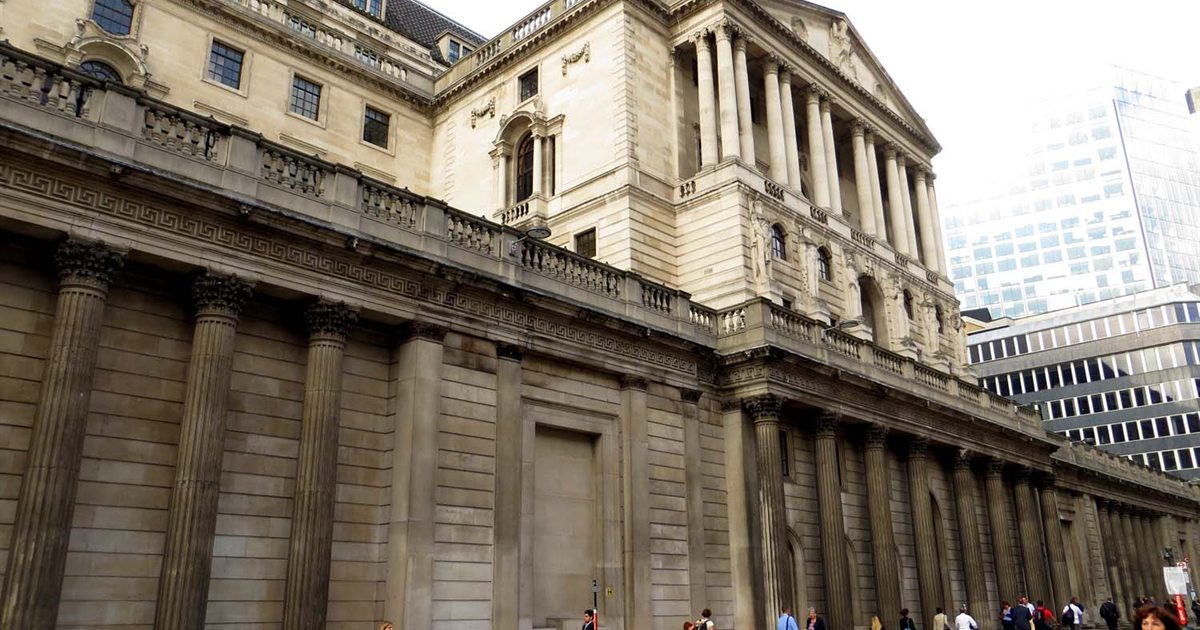
Photo: Steve Daniels / Wikimedia Commons, CC BY-SA 2.0, cropped
UK 30-Year Borrowing Costs Just Hit 6% for the First Time Since 1998. Here's Why It Matters Outside Britain
- The UK 30-year gilt yield briefly hit 6.03% on October 1, 2026, the highest since early 1998, before easing to about 5.9%.
- The 10-year gilt yield reached 5.44% on Monday, September 28, its highest in 19 years. The government sold £4.25 billion of 10-year gilts at 5.38%, the highest auction yield since 1999.
- The FTSE 100 fell 1.68% on Thursday to 10,428, its worst day since May. It ended the week down 2.18% at 10,461.95.
- The Bank of England held its rate at 3.75% on September 17 in a 6-3 vote. Markets price about an 83% chance of a hike on November 5.
- Chancellor John Healey delivers the Budget on October 28. UK inflation was 3.1% in August.
Six percent
On Thursday, October 1, the interest rate the British government pays to borrow for 30 years touched 6.03%. The last time it was that high was early 1998.
The 10-year yield had already hit 5.44% on Monday, a 19-year high. And when the government auctioned £4.25 billion of 10-year bonds on Tuesday, it had to pay 5.38%, the most for that kind of sale since 1999.
UK government bonds are called gilts. They work just like US Treasuries: when investors get nervous, they demand a higher yield to lend.
What spooked the market
No single thing. It's a pile-up:
- Inflation. UK prices rose 3.1% in the year to August, and oil is above $100.
- Rate hikes coming. Three of the nine Bank of England policymakers already voted to raise rates in September. Markets see about an 83% chance the Bank hikes on November 5.
- A lot of debt to sell. The government is a heavy borrower, and buyers want to be paid more.
- A Budget on October 28. Chancellor John Healey has only a thin cushion against his own fiscal rules. Bloomberg Economics estimates about half of his £23.6 billion buffer has already been eaten up by higher borrowing costs.
- It's global. The US 10-year yield touched about 5.34% the same day. France's hit a 24-year high.
That fourth point is the vicious circle. Higher yields mean the government spends more on interest. That leaves less room in the Budget, which makes investors more nervous, which pushes yields higher.
What happened to stocks
The FTSE 100 fell 1.68% on Thursday to 10,428, its worst day since May. Banks, housebuilders and other UK-focused companies led the drop. It recovered a little on Friday to finish the week at 10,461.95, down 2.18%.
A few moves stood out:
| Stock | Weekly move | Why |
|---|---|---|
| Barratt Redrow, Persimmon | Up about 14% on Monday | New government "Your First Home" scheme |
| Vesuvius | +21% | Takeover bid from RHI Magnesita |
| IG Group | -24% | Revenue fell 14% and guidance was cut |
The housebuilder rally shows how sensitive UK property is to politics. A helping hand for first-time buyers sent the builders soaring on Monday. Rising mortgage costs took some of the shine off by Thursday. UK house price growth slowed to 0.8% a year in September.
Why you should care if you don't live in the UK
1. It's a preview. The US, Canada, France and Japan all have big debts and rising yields. Britain is simply the most exposed, because its inflation has been stickier. What's happening in gilts is a sharper version of what's happening to US Treasuries.
2. You probably own some. UK stocks are roughly 3% to 4% of a typical global ETF. Shell, AstraZeneca, HSBC and Unilever are in most international funds.
3. It's a lesson about long bonds. People think of government bonds as safe. They're safe from default. They are not safe from price swings. Someone who bought a 30-year gilt a few years ago at a low yield is sitting on a large paper loss today.
What to take from it
- Match your bonds to your time frame. Money you need in two years belongs in short-term bills or savings, not 30-year bonds.
- Higher yields are an opportunity for new money. A 6% government yield hasn't been on offer in Britain for a generation.
- Stay diversified by country. No single market, including your own, deserves all your money.
What's next
- October 28: the UK Budget
- November 5: Bank of England rate decision
If the Budget reassures bond investors, yields could fall quickly. If it doesn't, 6% may not be the peak.
Frequently asked questions
What is a gilt?
A gilt is a UK government bond. When you buy one, you lend money to the British government and it pays you interest. The gilt yield is the return investors demand. It works the same way as a US Treasury or a Government of Canada bond.
How high are UK gilt yields in October 2026?
The 30-year gilt yield briefly reached 6.03% on October 1, 2026, its highest since early 1998. The 10-year yield hit 5.44% on September 28, the highest in 19 years.
Why are UK borrowing costs rising?
Several reasons at once: UK inflation is 3.1% and energy prices are high; investors expect the Bank of England to raise rates in November; the government is selling a lot of debt; and there is uncertainty ahead of the October 28 Budget. Bond yields are also rising in the US, France and Japan.
Will the Bank of England raise interest rates?
Markets think so. Pricing implied about an 83% chance of a hike at the November 5 meeting. In September the committee voted 6-3 to hold at 3.75%, with three members already wanting an increase to 4%. Goldman Sachs, Barclays, UBS and J.P. Morgan all forecast a November hike.
Does this affect investors in the US and Canada?
Indirectly. UK stocks are a small slice of most global ETFs. The bigger lesson is that bond markets worldwide are demanding higher yields from governments that borrow heavily. US and Canadian long-term yields have been rising for the same reasons.
Primary sources
- Yahoo Finance UK — FTSE 100 today: Stocks fall as UK 30-year gilt yield hits near three-decade high
- Corfe Capital — This Week on the FTSE, 2 October 2026
- SPF Private Clients — Bank of England votes to hold the base rate at 3.75% in September 2026
- T. Rowe Price — Global Markets Weekly Update (week ended Oct. 2, 2026)
Data & disclaimer: This article is for educational purposes only and is not financial or investment advice. Figures reflect data available as of Oct 3, 2026, and conditions change — always confirm current pricing, rates and rules with the provider before you act. Written by Elizabeta Dimoska. See our editorial standards and disclosure.
Comments