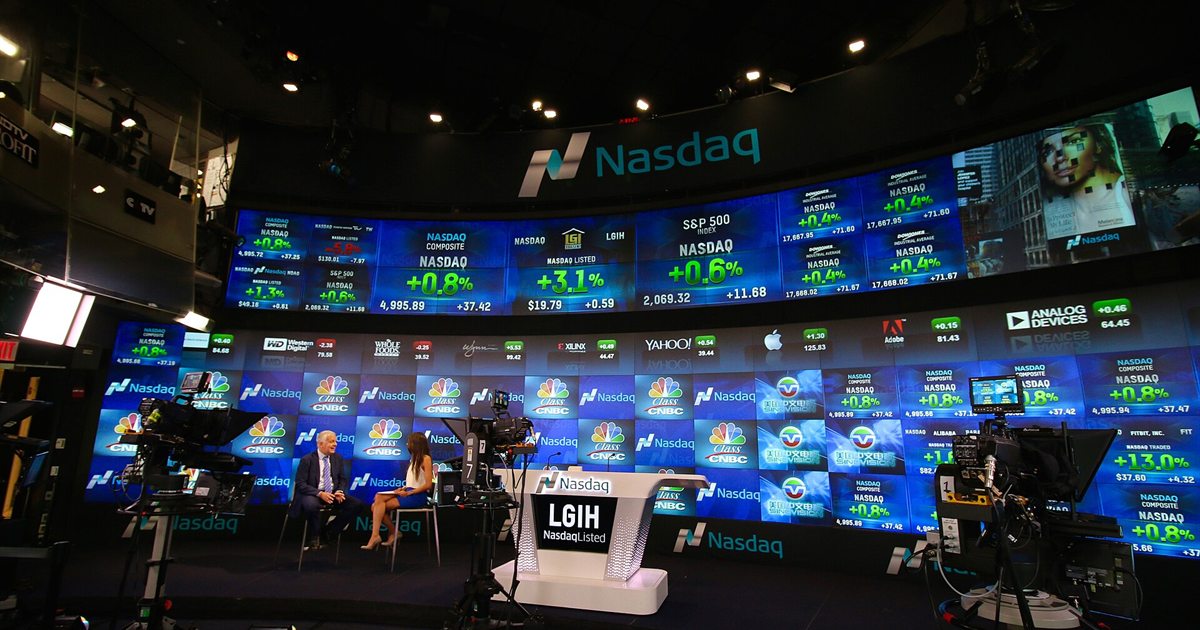
Photo: Luca Marfè / Wikimedia Commons, CC BY 2.0, cropped
Best Day Trading Platforms in the US (October 2026): 8 Brokers Ranked by Fees and Margin Rates, Now That the $25,000 Rule Is Gone
The $25,000 pattern day trader rule ended on June 4, 2026. Brokers now watch your intraday margin instead, and some are still phasing in the change. For day trading, Interactive Brokers is the best overall for cost and execution: IBKR Pro charges about $0.005 a share with the lowest margin rates for large balances. Charles Schwab's thinkorswim is the best free platform for charts and tools. Robinhood has the lowest margin rate on small balances at 5.25% up to $50,000, and Webull offers $0 stock and options trades with solid charts. Schwab and Fidelity charge roughly 10% to 12% on small margin loans. Most day traders lose money, and lower fees don't change that.
The big change in 2026: the $25,000 rule is gone
From 2001 until this year, US rules labelled you a pattern day trader if you made four or more day trades in five business days. Once labelled, you needed $25,000 in your account or you were locked out.
That rule is finished.
| Date | What happened |
|---|---|
| April 14, 2026 | The SEC approved FINRA's replacement rule |
| June 4, 2026 | The new rule took effect |
| Up to 18 months after | Brokers can phase in their systems |
What replaced it: intraday margin. Your broker now checks that you have enough equity during the day to support the positions you actually hold. There's no day-trade counter and no $25,000 floor.
What didn't change:
- You still need a margin account to trade on borrowed money.
- Normal margin requirements still apply.
- Brokers can set stricter house rules.
- Some brokers haven't finished switching over. Ask yours.
Small accounts can now day trade freely. Whether they should is a separate question. The evidence that most day traders lose money hasn't changed.
How we ranked them
Rates and fees were checked on October 9, 2026, from broker pages where available and recent published reviews otherwise. Margin rates move with the Federal Reserve, which raised rates in September, so confirm before you borrow.
What matters for day trading, in order:
- Order execution and tools. Speed, hotkeys, Level 2 quotes, direct routing.
- Margin interest, if you hold borrowed positions overnight.
- Commissions and options fees.
The comparison
| Rank | Broker | Stock trades | Options, per contract | Margin rate, small balance | Best for |
|---|---|---|---|---|---|
| 1 | Interactive Brokers (Pro) | About $0.005/share, $1 min | $0.15 to $0.65 | Lowest for large balances | Cost and execution |
| 2 | Charles Schwab (thinkorswim) | $0 | $0.65 | About 10% to 12% | Best free tools |
| 3 | Webull | $0 | $0 | About 9% | $0 trades with real charts |
| 4 | Fidelity | $0 | $0.65 | About 10.5% to 12% | Execution quality, all-round |
| 5 | Robinhood | $0 | $0 | 5.25% | Cheapest small margin loans |
| 6 | tastytrade | $0 | $1 to open, $0 to close | About 11% | Options day traders |
| 7 | moomoo | $0 | $0 | Varies | Free Level 2 and tools |
| 8 | E*TRADE | $0 | $0.65, or $0.50 with 30+ trades a quarter | Varies | Power E*TRADE platform |
Sources: FINRA, broker pricing pages and published reviews, October 9, 2026. Regulatory fees apply to all.
1. Interactive Brokers: best overall
IBKR is what professionals and serious individuals use.
- IBKR Pro charges about $0.005 a share with a $1 minimum, or tiered pricing from about $0.0035 for high volume. In return you get direct routing to exchanges and control over how orders are filled.
- IBKR Lite charges $0 on US stocks, with less control.
- Margin is priced at a benchmark rate plus a small markup, and is usually the cheapest available on large balances.
- Trader Workstation has every order type, hotkey and scanner you could want.
The trade-off is a steep learning curve. See how to open an Interactive Brokers account.
Best for: active traders, margin users, anyone trading size.
2. Charles Schwab (thinkorswim): best free platform
thinkorswim came to Schwab with TD Ameritrade and is still the best free trading platform in the US. Charting, scanners, replay of past trading days for practice, and a full paper-trading mode.
Stock trades are $0. Margin is the weak spot, at roughly 10% to 12% on smaller balances.
Best for: traders who close positions by the end of the day and want the best tools at no cost.
3. Webull: best $0 app for charts
Webull charges $0 on stocks and $0 per contract on stock and ETF options. Index options cost $0.50 a contract. Its charts and screeners are well ahead of Robinhood's, and it offers extended trading hours.
Best for: small and mid-size accounts that want free trades and decent tools.
4. Fidelity: best all-round
Fidelity doesn't sell its customers' stock orders to market makers, which tends to mean better fill prices. Its Active Trader tools are solid without matching thinkorswim. Margin is about 10.5% to 12% on small balances.
Best for: traders who also want one home for long-term investing.
5. Robinhood: cheapest margin on small balances
Robinhood's published margin rates as of October 9, 2026:
| Margin balance | Rate |
|---|---|
| Up to $50,000 | 5.25% |
| $50,000 to $100,000 | 5.05% |
| $100,000 to $1 million | 4.75% |
| $1 million to $10 million | 4.5% |
| $10 million to $50 million | 4.45% |
| $50 million and above | 4.2% |
Gold subscribers get their first $1,000 of margin interest-free. That's less than half what Schwab or Fidelity charge on a small loan.
The trade-off is tools and design. The app is built to make trading feel easy, which isn't always a favour. See Robinhood vs Webull.
Best for: small accounts that borrow.
6 to 8. tastytrade, moomoo and E*TRADE
- tastytrade is built for options: $1 a contract to open, $0 to close, capped at $10 per leg. Stocks are $0 plus a tiny clearing fee.
- moomoo offers $0 trades with free Level 2 quotes and detailed charts.
- E*TRADE has the capable Power E*TRADE platform and cuts options to $0.50 a contract if you make 30 or more trades a quarter.
What margin really costs
Day traders who close everything before the bell pay no margin interest. Interest is charged on money borrowed overnight.
If you do hold a $20,000 loan for a full year:
| Broker | Approximate rate | Yearly interest |
|---|---|---|
| Robinhood | 5.25% | $1,050 |
| Webull | About 9% | $1,800 |
| Schwab | About 11% | $2,200 |
| Fidelity | About 11.5% | $2,300 |
Your investments have to earn more than that rate just to break even. More in margin accounts explained.
Cash account or margin account?
Cash account: you trade only with money you have. Since stock trades settle in one business day, you can reuse cash the next day. There's no borrowing and no margin call.
Margin account: you can reuse funds immediately, borrow, and sell short. You can also lose more than you put in.
If you're new, a cash account is the safer place to learn.
Taxes most new traders miss
- Short-term gains are taxed as ordinary income. There's no lower rate for anything held a year or less.
- The wash sale rule. Sell at a loss and buy the same stock back within 30 days, and you can't claim the loss yet. Active traders trigger this constantly.
- Hundreds of trades mean a long tax form. Your broker's 1099-B does the heavy lifting, but check it.
How to choose
- You want the lowest costs and best fills: Interactive Brokers.
- You want the best free tools: Schwab's thinkorswim.
- You have a small account and want $0 trades: Webull.
- You borrow small amounts: Robinhood.
- You day trade options: tastytrade or Webull. See our options broker ranking.
And one honest suggestion: before risking real money, paper trade for a few months on thinkorswim or Webull. If you can't make money with pretend dollars, real ones won't help.
Frequently asked questions
Is the pattern day trader rule still in effect?
No. The SEC approved FINRA's replacement on April 14, 2026, and it took effect on June 4, 2026. The $25,000 minimum and the pattern day trader label are gone. Brokers now monitor whether you have enough equity during the day for the positions you actually hold. Firms have up to 18 months to update their systems, so some may still apply older limits.
Can I day trade with less than $25,000 now?
Yes, once your broker has adopted the new intraday margin rules. You still need a margin account and enough equity to cover your positions, and the usual initial and maintenance margin rules still apply. You can also day trade in a cash account using only settled funds.
What is the best broker for day trading?
Interactive Brokers is the top choice for cost and order execution, especially if you use margin or trade large size. Charles Schwab's thinkorswim is the strongest free platform for charting and analysis. Webull and Robinhood suit smaller accounts that want $0 trades and a simple app.
Which broker has the lowest margin rates?
For small balances, Robinhood charges 5.25% on margin up to $50,000 as of October 9, 2026, falling to 4.2% on very large balances. Interactive Brokers Pro is typically the lowest for large balances. Schwab and Fidelity charge roughly 10% to 12% on small loans.
How are day trading profits taxed in the US?
Gains on positions held a year or less are short-term capital gains, taxed at your ordinary income tax rate. The wash sale rule can also disallow a loss if you buy the same stock again within 30 days before or after selling it at a loss.
Do day traders make money?
Most do not. Studies across the US, Brazil, Taiwan, India and Europe find that roughly 70% to 97% of day traders lose money, depending on the market and time period. Fees, professional competition and overtrading are the main reasons.
Primary sources
- FINRA — Understanding the new intraday margin requirements
- FINRA — New intraday margin standards replace the day trading margin requirements (April 15, 2026)
- Robinhood — Margin rates
- Webull — Pricing
- Interactive Brokers — Margin rates
- NerdWallet — Best trading platforms for day trading in 2026
- StockBrokers.com — Best day trading platforms and apps for 2026
Data & disclaimer: This article is for educational purposes only and is not financial or investment advice. Figures reflect data available as of Oct 9, 2026, and conditions change — always confirm current pricing, rates and rules with the provider before you act. Written by Elizabeta Dimoska. See our editorial standards and disclosure.
Comments