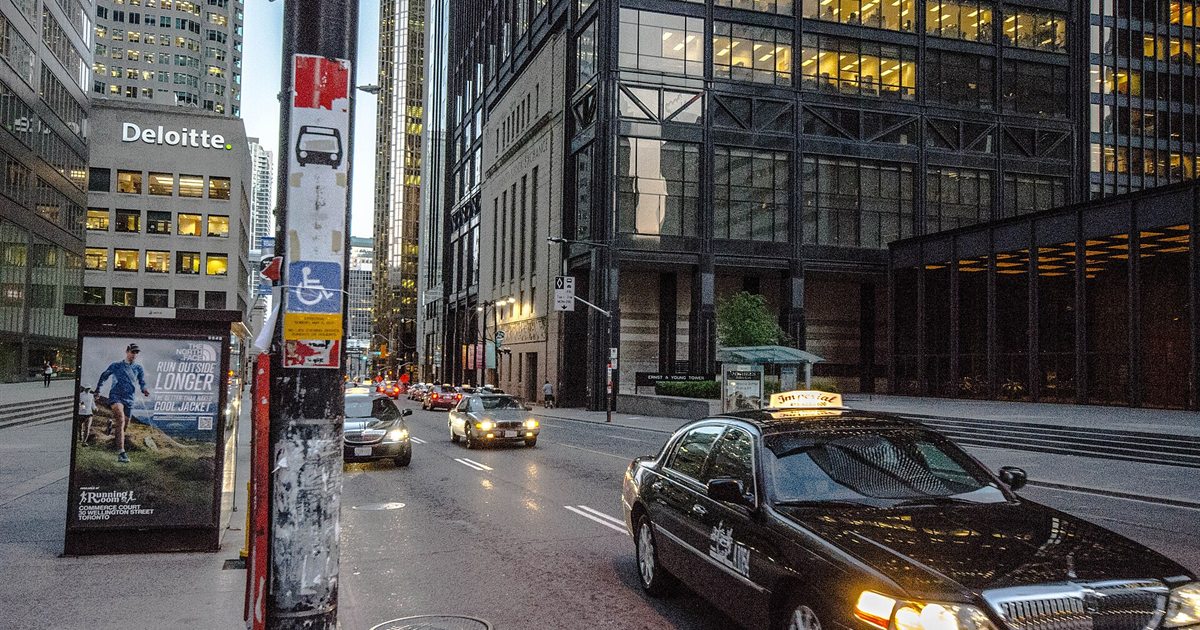
Photo: Chris Tyler / Wikimedia Commons, CC BY-SA 2.0, cropped
Best Day Trading Platforms in Canada (October 2026): 9 Brokers Ranked by Commissions, Currency Fees and Margin Rates
For day trading in Canada, Interactive Brokers has the lowest total cost for most active traders: about C$0.01 a share (C$1 minimum), currency conversion near 0.002%, and the lowest margin rates. For $0 commissions, Questrade and Webull Canada offer the best trading tools, while National Bank Direct Brokerage and BMO InvestorLine are the $0 options at a bank. If you trade US stocks, the 1.5% currency conversion fee at most Canadian brokers costs far more than commissions, so hold US dollars. Canada has no pattern day trader rule, but the CRA can tax frequent trading as business income, even inside a TFSA.
How we ranked them
Fees were checked on October 9, 2026, using each broker's own pricing page where we could reach it. Fees change, so confirm before you open an account.
We ranked on four things, in order of how much they cost a busy trader:
- Currency conversion. Charged every time you swap Canadian and US dollars.
- Commissions. Charged per trade or per share.
- Margin interest. Charged if you borrow to trade.
- Tools. Speed, charts, Level 2 quotes and order types.
A warning before the ranking. The research is clear that most day traders lose money. Low fees slow the losses. They don't change the odds.
The comparison
| Broker | Canadian stocks | US stocks | Currency conversion | Best for |
|---|---|---|---|---|
| Interactive Brokers | C$0.01/share, min C$1 | US$0.005/share, min US$1 | About 0.002% | Lowest total cost |
| Questrade | $0 | $0 | About 1.5% | $0 trades with a real trading platform |
| Webull Canada | $0 | $0 | Check fee schedule | Mobile charts and free Level 2 |
| National Bank Direct Brokerage | $0 | $0 | About 1.7% under US$25,000 | $0 at a bank |
| BMO InvestorLine | $0 | $0 | Spread applies | $0 at a Big Five bank |
| Wealthsimple | $0 | $0 | 1.5%, less in a USD account | Low posted margin rates |
| Qtrade | $0 | $0 | Spread applies | Research and service |
| Moomoo Canada | C$0.0149/share, min C$1.49 | US$0.0099/share, min US$1.99 | Listed as $0 | Advanced tools |
| TD Direct Investing | $9.99, or $7 with 150+ trades a quarter | Same | Spread applies | TD Active Trader platform |
Sources: broker pricing pages, October 9, 2026. Exchange and regulatory fees can apply on top.
1. Interactive Brokers: lowest total cost
IBKR is the only broker here that charges a commission on every trade and still comes out cheapest for many active traders. The reason is everything else.
- Commissions: C$0.01 per share with a C$1 minimum on Canadian stocks, capped at 0.5% of the trade. About US$0.005 per share with a US$1 minimum on US stocks. High-volume traders can pick tiered pricing that starts lower.
- Currency conversion: about 0.002% of the amount, with a minimum near US$2. On US$10,000 that's about US$2. At a typical broker it's about US$150.
- Margin: rates are set at a benchmark plus a small markup and are the lowest of any broker on this list.
- Tools: Trader Workstation is built for professionals, with direct routing and every order type.
The downside is complexity. The platform takes time to learn. See how to open an Interactive Brokers account in Canada.
Best for: anyone trading US stocks often, using margin, or trading size.
2. Questrade: best $0 platform
Questrade charges $0 on Canadian and US stocks and ETFs. Its Edge desktop platform has proper charting, hotkeys and advanced orders, which most free apps lack.
The cost to watch is currency conversion at about 1.5%. Questrade lets you hold US dollars in both registered and non-registered accounts, so you can convert once and keep trading. It also supports Norbert's Gambit for cheap conversion.
Best for: active traders who want free trades and a desktop platform.
3. Webull Canada: best free mobile tools
Webull charges $0 on Canadian and US stocks and gives new users free Nasdaq Level 2 quotes for a trial period. Its charts are among the best on a phone.
Best for: chart-focused traders who work from mobile.
4. National Bank Direct Brokerage: $0 at a bank
NBDB has charged $0 on all online stock and ETF trades since 2021. Its posted margin rates are 6.25% in Canadian dollars and 8.75% in US dollars.
Two costs to know: currency conversion is about 1.7% on amounts under US$25,000, and there's a $100 annual fee unless you hold $20,000, are 30 or younger, or meet another exemption.
Best for: traders who want everything at one bank.
5. BMO InvestorLine: $0 at a Big Five bank
BMO moved to $0 stock and ETF trades on September 14, 2026, the first of the five big banks to do it. See what changed at BMO.
Best for: existing BMO customers.
6. Wealthsimple: lowest posted margin rates
Wealthsimple charges $0 commissions and publishes its margin rates. As of September 18, 2026:
| Client tier | Assets needed | CAD margin | USD margin |
|---|---|---|---|
| Core | $1 | 4.95% | 7.5% |
| Premium | $100,000 | 4.45% | 7.0% |
| Generation | $500,000 | 3.95% | 6.5% |
Currency conversion is 1.5% in a Canadian-dollar account. A US-dollar account costs $10 a month on Core and is included on higher tiers, with conversion fees that fall from 1.5% to 0% as the amount rises.
The catch is tools. It has no Level 2 data or direct routing, so it suits swing traders more than true day traders.
Best for: borrowing cheaply for longer holds.
7 to 9. Qtrade, Moomoo and TD
- Qtrade went to $0 on stocks and ETFs on October 28, 2025. Strong research, lighter trading tools.
- Moomoo Canada charges per share on both Canadian and US stocks, with a US$1.99 minimum on US trades. You're paying for its tools.
- TD Direct Investing charges $9.99, or $7.00 if you make 150 or more trades a quarter. Its TD Active Trader platform is powerful, but the commissions are hard to justify now that rivals are free.
What it really costs: two examples
Example 1: Canadian stocks. You make 20 round trips a month (40 trades) of 200 shares of a $30 stock.
| Broker | Monthly commissions |
|---|---|
| Questrade, Webull, NBDB, BMO, Wealthsimple, Qtrade | $0 |
| Interactive Brokers | 40 × $2 = $80 |
| Moomoo Canada | 40 × $2.98 = $119 |
| TD Direct Investing (standard) | 40 × $9.99 = $400 |
For Canadian stocks alone, a $0 broker wins.
Example 2: US stocks, converting each time. You buy US$5,000 of a US stock with Canadian dollars and sell it the same day, converting back.
| Broker | Commissions | Currency cost | Total |
|---|---|---|---|
| Typical $0 broker at 1.5% | $0 | About US$150 | About US$150 |
| Interactive Brokers | About US$2 | About US$4 | About US$6 |
Do that ten times a month and the "free" broker costs about US$1,500.
The fix is simple: hold US dollars. Convert once, then trade US stocks in a US-dollar account. With no conversions, the $0 brokers are free again.
Three rules Canadian day traders should know
1. There's no pattern day trader rule here. Canada never had the US$25,000 minimum. The US replaced its own rule on June 4, 2026.
2. The CRA may call it a business. If you trade often, hold for short periods and spend real time on it, your profit is likely business income. All of it is taxed, not half.
3. A TFSA isn't a loophole. The CRA has reassessed people who day traded in a TFSA and taxed their gains. Keep frequent trading out of registered accounts. More in TFSA vs cash vs margin accounts.
How to choose
- You trade Canadian stocks only: Questrade or Webull Canada.
- You trade US stocks often: Interactive Brokers, or a $0 broker with a US-dollar account.
- You use margin: Interactive Brokers, then Wealthsimple.
- You want it all at your bank: National Bank or BMO.
- You trade options: see our options platform ranking.
Frequently asked questions
What is the best day trading platform in Canada?
For most active traders, Interactive Brokers has the lowest all-in cost, with commissions of about C$0.01 per share, currency conversion near 0.002% and the lowest margin rates. If you want $0 commissions, Questrade and Webull Canada have the strongest trading tools among the free brokers.
Is there a pattern day trader rule in Canada?
No. Canada has never had a rule requiring a minimum balance to day trade. The US rule that required $25,000 was replaced on June 4, 2026 with intraday margin requirements, so it no longer applies in the old form either.
How much money do I need to start day trading in Canada?
There is no legal minimum. Most $0 brokers let you open an account with any amount. In practice, small accounts are hard to day trade because a single currency conversion or a minimum commission can wipe out a small gain.
Can I day trade in a TFSA?
You can place the trades, but it is risky. If the Canada Revenue Agency decides you are carrying on a trading business inside your TFSA, the profits become fully taxable. Frequent trading, short holding periods and trading as your main activity are among the signs it looks at.
How is day trading taxed in Canada?
The CRA usually treats regular day trading as business income, which means 100% of your profit is taxed at your marginal rate. Capital gains treatment, where only half the gain is taxable, generally applies to investing, not to frequent trading. Business losses can be deducted against other income.
What is the cheapest way to day trade US stocks from Canada?
Keep US dollars in a US-dollar account so you are not converting on every trade. Then use a broker with $0 commissions on US stocks, such as Questrade, Webull Canada or National Bank, or use Interactive Brokers, which charges about half a US cent per share and converts currency for almost nothing.
Primary sources
- Interactive Brokers Canada — Commissions: stocks, ETFs and warrants
- Wealthsimple — Pricing (commissions, FX and margin rates as of September 18, 2026)
- National Bank Direct Brokerage — Pricing
- Webull Canada — Pricing
- Moomoo Canada — Pricing
- TD Direct Investing — Pricing
- Questrade — Self-directed commissions, plans and fees
- FINRA — Understanding the new intraday margin requirements
Data & disclaimer: This article is for educational purposes only and is not financial or investment advice. Figures reflect data available as of Oct 9, 2026, and conditions change — always confirm current pricing, rates and rules with the provider before you act. Written by Elizabeta Dimoska. See our editorial standards and disclosure.
Comments